
 For many families, the Christmas feast is not complete without the Christmas ham. Did you know that the traditional Christmas ham was not originally associated with Christmas at all, but like so many other holiday traditions, grew out of ancient pagan practices? Continue reading
Category Archives: Bon Appetit Wednesday
Bon Appetit Wednesday! Slow-Cooked, Mustard-Crusted Pork Loin
Posted in Blog, Bon Appetit Wednesday, Culinary, Culture, Holidays, Public Life
Tagged ancient history, AntiquityNOW, boar, Freyr, Norse mythology, yule log, Yuletide
Bon Appetit Wednesday! Happy Holidays! Enjoy an Eggnog Courtesy of Your Ancestral Genes

Image courtesy of Reese Lloyd on Flickr.
Eggnog is a holiday beverage with a history and a taste that can’t be beat. To really appreciate the roots of eggnog, we have to go back 7,500 years. That was a period critical to the human species—or at least to those of us who indulge in dairy. It was sometime during that period that humans in the region between the central Balkans and central Europe developed “lactase persistence.” Professor Mark Thomas of University College London (UCL) Genetics, Evolution and Environment says in a 2009 study, “Most adults worldwide do not produce the enzyme lactase and so are unable to digest the milk sugar lactose. However, most Europeans continue to produce lactase throughout their life, a characteristic known as lactase persistence. In Europe, a single genetic change (13,910*T) is strongly associated with lactase persistence and appears to have given people with it a big survival advantage.” Continue reading
Bon Appetit Wednesday! St. Nicholas or Santa Claus? A Cookie Is Still As Sweet….

Below are two cookie recipes: one in honor of St. Nick and the other Santa Claus. For those of you who have a healthy dose of curiosity as well as a sweet tooth, let’s explore how these two holiday figures came to be.
St. Nicholas was a bishop in southwestern Turkey in the 4th century. Born to a wealthy family, he gave much of his money away in support of the poor. As the bishop of Myra, he had a number of miracles attributed to him and was eventually declared a saint. His feast day was celebrated on December 6th. During St. Nicholas’ lifetime, Pope Julius I decided that Jesus should be given a day that could be celebrated in honor of his birth. Because the winter solstice was already being celebrated, the birthday for Jesus was designated to coincide, which eventually proved successful in “Christianizing” the previously pagan holiday. Over time St. Nicholas’ day and Jesus’ birthday became associated, and the Christmas tradition began. Because St. Nicholas was beneficent in his offerings to the poor, stuffed stockings and gifts became synonymous with this day. Continue reading
Posted in Blog, Bon Appetit Wednesday, Celebrities, Culinary, Culture, Holidays, Public Life, Religion
Tagged ancient history, AntiquityNOW, Christmas, Dutch, holidays, Jesus, Saint Nicholas, Sancte Claus, Santa Claus, Sinter Klaus
Bon Appetit Wednesday! Imperial Roman Honey-Spiced Wine
 In yesterday’s blog post we told you about the recent discovery of one of the oldest and largest wine cellars in the world belonging to Canaanites living in north Israel around 1700 BCE. So today we’ve decided to share an ancient wine recipe that you can make to keep in your own wine cellar.
Spiced wine dates back to ancient Egypt, circa 3150 BCE, when it was made mainly for medicinal purposes and as a necessary menu item in the afterlife. The recipe often included pine resin, figs, and herbs like balm, coriander, mint and sage.[1] Several jars of up to five different types of wine were placed in the tombs of pharaohs and other royals.[2] Continue reading
Posted in Blog, Bon Appetit Wednesday, Culinary, Culture
Tagged ancient history, AntiquityNOW, conditum, culinary, Egypt, Greek, honey, mulsum, Roman wine, Spiced wine
Bon Appetit Wednesday! Roasted Leeks and Apples: A Thanksgiving Savory and Sweet
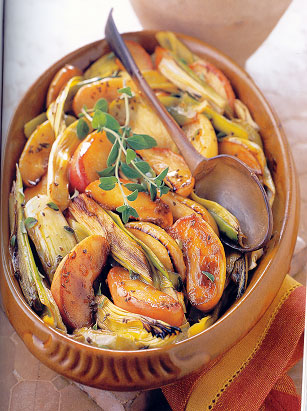 This modern dish is a delightful savory and sweet combination that uses two popular ingredients: leeks and apples. It can be served as a side dish to any entrée.
The leek and apple have nourished people for thousands of years. Both have been cultivated across the world and enriched our mythology and literature with symbolism. Continue reading
Posted in Blog, Bon Appetit Wednesday, Culinary, Culture, Holidays, Public Life, Religion
Tagged Agatha Christie, ancient history, AntiquityNOW, apples, Bon Appetit Wednesday, leeks, Nero, recipe, Rosh Hashanah, Thanksgiving
Bon Appetit Wednesday! Ancient Greek Baklava
The holiday season is upon us and sweets are everywhere. Whether it’s cookies, cupcakes or candy, everyone enjoys indulging his or her sweet tooth. This season, celebrate the past and stand out from the crowd with a delicious ancient recipe.
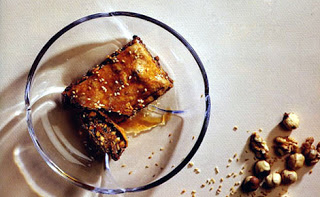 Baklava is a popular dish originally made in the former Ottoman Empire that can also be found in Central and Southwest Asia. While you may have enjoyed a slice of this sweet, rich pastry in a local Greek or Turkish restaurant, you probably haven’t tasted baklava made the ancient Greek way. This recipe is a version of baklava called gastrin, or γάστριν in Greek. It contains the mix of ingredients that distinguishes its layered flavor. Continue reading
Posted in Blog, Bon Appetit Wednesday, Culinary, Culture, Holidays, Public Life, Religion
Tagged ancient history, ancient recipes, AntiquityNOW, baklava, Bon Appetit Wednesday, Gastrin, Greek, Ottoman Empire, petimezi
Coming Soon! Bon Appetit Wednesday! You’ll Love Our “Recipes With a Past”
 Is cinnamon your secret ingredient? Made from bark stripped from the laurel tree, it has been in the pantries, larders and spice racks of cooks from China to Rome to Sri Lanka for nearly 5,000 years. Are you a cheesecake aficionado? Your love carries back to the first Olympics in ancient Greece where the Olympian superstars were served a winner’s portion of the delight.
AntiquityNOW is pleased to announce Bon Appetit Wednesday! Each Wednesday we’ll post a new “recipe with a past” that has tickled taste buds for thousands of years. Give your weekend parties a distinctive flair with a repast that has a story to tell. Dazzle at potluck dinners with a chocolate concoction courtesy of the Maya. Connect to our ancient ancestors through dishes that can still nurture and satisfy today. By the way, send us your own recipes. We’ll research the origins and give you a shout out in our blog. And just to remind you of how ancient tastes and ingenuity have created today’s culinary fare, here’s a list of some recipes we’ve posted about in the past!
Posted in Blog, Bon Appetit Wednesday, Culinary, Culture
Tagged ancient food, ancient history, AntiquityNOW, Bon Appetit Wednesday, cheesecake, cinnamon, culinary, Greece, recipes




 AntiquityNOW