
 Tonight’s sundown marks the start of one of the most confusing holidays to spell – Hanukkah! Or Chanukah. Or Chanukkah. But that’s not all. For the first time since 1888, and not to be repeated for 79,043 years, Hanukkah and Thanksgiving, which is celebrated on the fourth Thursday each November in the United States, occur on the same day. Some verbal wits on social media have dubbed this very rare occurrence as …drum roll…”Hanu-giving.” Others are calling it “Thanksgivukkah.” Whatever the favorite, at least it has 79,043 years to catch on. Continue reading
Category Archives: Religion
When Holidays Collide and Facebook Rules: Hanukkah + Thanksgiving = Thanksgivukkah
Posted in Blog, Culinary, Culture, Holidays, Public Life, Religion
Tagged ancient history, AntiquityNOW, Hanukkah, holidays, Judaism, latkes, Maccabees, Seleucids, Thanksgiving, Thanksgivukkah
Bon Appetit Wednesday! Ancient Greek Baklava
The holiday season is upon us and sweets are everywhere. Whether it’s cookies, cupcakes or candy, everyone enjoys indulging his or her sweet tooth. This season, celebrate the past and stand out from the crowd with a delicious ancient recipe.
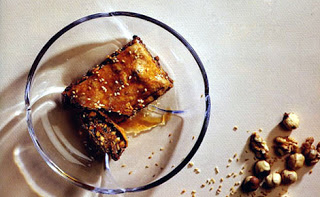 Baklava is a popular dish originally made in the former Ottoman Empire that can also be found in Central and Southwest Asia. While you may have enjoyed a slice of this sweet, rich pastry in a local Greek or Turkish restaurant, you probably haven’t tasted baklava made the ancient Greek way. This recipe is a version of baklava called gastrin, or γάστριν in Greek. It contains the mix of ingredients that distinguishes its layered flavor. Continue reading
Posted in Blog, Bon Appetit Wednesday, Culinary, Culture, Holidays, Public Life, Religion
Tagged ancient history, ancient recipes, AntiquityNOW, baklava, Bon Appetit Wednesday, Gastrin, Greek, Ottoman Empire, petimezi
Terrorism in the Ancient World: Part 2
In the modern age, terrorism dominates the news headlines more frequently than we would like, and yet the term and its use are often relatively employed and dependent upon the parties involved. This is, in part, due to the fact that the term terrorism is politically and emotionally charged, “a word with intrinsically negative connotations that is generally applied to one’s enemies and opponents.”[1] For this article, terrorism will be defined as the “political violence in an asymmetrical conflict that is designed to induce terror and psychic fear (sometimes indiscriminate) through the violent victimisation and destruction of non-combatant targets (sometimes iconic symbols).”[2] Continue reading
Posted in Blog, Culture, Human Rights, Politics, Public Life, Religion, War and Violence
Tagged ancient history, AntiquityNOW, Great Fire of Rome, Hashashin, Iceni, Jewish-Roman Wars, Nero, Queen Boudica, Sicarii, terrorism
KIDS’ BLOG! Diwali, the Festival of Lights
 For five days this week, starting on Sunday, November 3, Hindus around the world will celebrate Diwali, or Deepavali, the Festival of Lights. Diwali marks the triumph of light over darkness, of good over evil. Lamps are lit, colored lights dance against dark skies and fireworks explode in fiery celebration. People exchange gifts, often of gold, dress up in new clothes, prepare special dishes and sweets, and with this celebration acknowledge the gods for giving humans health, wealth, peace and prosperity. Continue reading
Posted in Culture, Holidays, Kids Blog, Kids: Culture, Kids: Holidays, Kids: Public Life, Kids: Religion, Religion
Tagged ancient history, AntiquityNOW, black hole, Diwali, good and evil, Hinduism, holidays, light and dark, religion
Guardians of the “Gate to Hell” Discovered Just in Time for Halloween

Image courtesy of Jim Pennucci
During the coming weeks, people around the world will celebrate the supernatural and pay respects to the spirit world on holidays such as Halloween, El Dia de los Muertos, the Obon Festival and the Teng Chieh festival. While holidays arose for different reasons, they each have a connection to the “other side” where the spirits of those who have gone before still dwell. And now, almost as if on cue, a group of Italian archaeologists has announced an exciting discovery at the ancient “Gate to Hell,” reminding us that our fascination with the afterlife is nothing new. Continue reading
Posted in Blog, Holidays, Public Life, Religion
Tagged ancient history, AntiquityNOW, Cerberus, Gate to Hell, Greek, Halloween, Hierapolis, Phrygia, Pluto's Gate, Roman, Turkey
Traditional Meets Modern: Celebrating the Food of Rosh Hashanah

The Shofar is blown in a synagogue during Rosh Hashana. Image courtesy of How Stuff Works.
L’Shanah Tovah![1] It is the first full day of Rosh Hashanah, the Jewish New Year, and Jews around the world are celebrating with introspection, prayers for renewal and food having meaning and symbolism for the holiday. Continue reading
Posted in Blog, Culinary, Culture, Holidays, Public Life, Religion
Tagged ancient history, AntiquityNOW, honey, Jewish New Year, Judaism, pomegranate, Rosh Hashanah
Ramadan Ends With Dishes That Celebrate the Heart of Palestinian Cuisine

Children perform in Jerusalem’s Old City during celebrations to mark the breaking of the fast on the seventh day of the holy month of Ramadan, on July 26, 2012. (Photo credit: AHMAD GHARABLI/AFP/GettyImages)
As Ramadan comes to a close, Muslims around the world are breaking their fasts and marking celebrations with family and friends. Ramadan is the 9th month of the Islamic calendar, although the dates change each year because the lunar and solar calendars are not exactly the same. The end of Ramadan occurs either 29 or 30 days from the beginning of the month, and is celebrated by the holiday of Eid ul-Fitr, where after morning prayers people exchange gifts, put up lights and decorations and feast on their favorite foods. The word Ramadan means scorching in Arabic and was designated as a Holy Month in honor of the Quran being revealed to the Prophet Muhammad in 610 CE. During Ramadan Muslims seek to purify themselves by forgoing material needs and focusing on spiritual devotion. They pray, read the Quran and carry out works of charity. Their self-denial of food and water helps them empathize with the less fortunate. Continue reading
Posted in Blog, Culinary, Culture, Public Life, Religion
Tagged ancient history, AntiquityNOW, Islam, Palestine, Ramadan
Celebrating Buddha’s Birthday: 1,800 Years of Buddhist Art Preserved by 21st Century Virtual Reality

The digital reconstruction of the south cave of Xiangtangshan with the missing fragments shown in yellow and reproduced in their original location. Image courtesy of BBC News.
Many people around the world are celebrating the birth of Gautama Buddha today. Across the globe revelers are gathering to honor the sage and his teachings that are the foundation of Buddhism. However, not everyone celebrates the milestone on this day. In fact, there are several different recognized days that differ according to the country and even the particular branch of Buddhism. Regardless of the day chosen, it is a time of joy, reflection and community. Continue reading
Posted in Art, Blog, Computer Technology, Culture, Public Life, Religion, Science and Technology
Tagged AntiquityNOW, Buddha's birthday, Buddhism, preservation
Cracking the History of Easter Eggs

Decorated Easter eggs
This Sunday, millions of children will be on the hunt for Easter eggs. While Easter eggs are associated with Christianity, the egg as a symbol of spring is found in cultures around the world and has been associated with renewed life for thousands of years. Continue reading
Posted in Blog, Public Life, Religion
Tagged ancient history, AntiquityNOW, Easter, spring




 AntiquityNOW