Category Archives: Art

ISIS, Syria and the Eradication of Culture: As the Ancient World Falls, Efforts Mount to Save World Heritage

AN Forum

ISIS has reportedly bulldozed the ancient city of Nimrud.

ISIS has reportedly bulldozed the ancient city of Nimrud.

You’ve probably seen the reports of destruction coming out of the Middle East. You’ve certainly heard of ISIS and its reign of terror. The loss of life and the horrifying atrocities being committed against innocent people are splashed across every news network. But ISIS is doing more than taking individual lives. The group is bent on annihilating ancient culture and what it represents. This part of the news story may not have caught everyone’s eye, but it is a desperately important part of that story. Continue reading
Picture This! Ten Mysterious Examples of Rock Art from the Ancient World

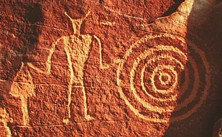
Petroglyph attributed to Classic Vernal Style, Fremont archaeological culture, eastern Utah, USA.

Petroglyph attributed to Classic Vernal Style, Fremont archaeological culture, eastern Utah, USA.

More than 6,000 years ago people were telling stories, but not with words. They captured their lives in pictures on the walls of caves and other rock surfaces.  This was a preliterate time of human existence, or a time before language was written down and people were able to read and write. But the stories these ancients told in pictures still engage the mind in astonishing ways. These chroniclers of their times gave us the gift of ancient sight. We can see how life was lived thousands of years ago just by looking at these artfully painted images.  How amazing is that? Continue reading

KIDS’ BLOG! Picture This: Pictograms and Petroglyphs and the Stories They Tell

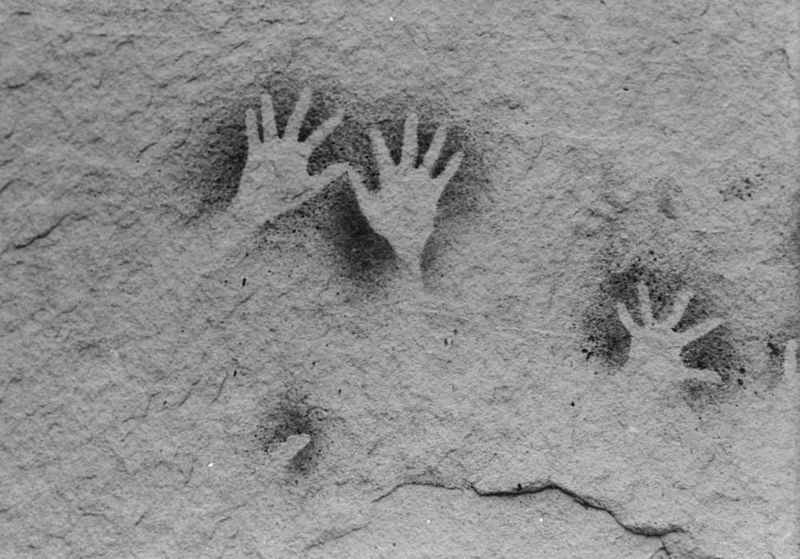
An example of Aboriginal hand stencil rock art.

An example of Aboriginal hand stencil rock art.

Update! This post was originally published on July 23rd, 2013. In the post below we explore the ancient history of rock art and how we’re still using pictograms to communicate today. Recently, ancient petroglyphs have been back in the news with the discovery of an ancient Aboriginal site in a suburb of Sydney, Australia. Researchers say the site is tens of thousands of years old and has probably been dismissed by locals as graffiti.[1] Actually, it is kind of like ancient graffiti and it helps us see into the past and get a glimpse of what life was like for the ancient people living in the area. The art is made up of hand stencils of things that were a part of everyday life, such as “eels, a spearhead and a crescent-shaped moon.”[2] The images are a particularly advanced form of aboriginal hand stencils in which numerous hands combine to form a particular shape.[3] There’s a waterhole nearby and the petroglyphs are on a rock overhang so the artists were probably living in this spot, using the rock for shelter and fishing out of the waterhole. Because of the size of the hands, researchers have concluded that this site was created by women and children.[4] Continue reading

Happy Year of the Ram, Sheep or Goat From AntiquityNOW!

Hanging scroll from the Qing Dynasty (1644-1911/1912)

Hanging scroll from the Qing Dynasty (1644-1911/1912)

We hope you enjoy a festive New Year filled with tradition, feasting, family and friends! Check out our previous posts on Chinese New Year to find fascinating history and some delicious recipes for the holiday:

5 Ways to Celebrate an Ancient Valentine’s Day, Courtesy of AntiquityNOW

BigPinkHeartIt’s the most romantic day of the year and you’re not quite sure how to show your one true love that you’ll love him or her for a thousand years…. We have the answer. Give a Valentine’s Day inspired by the ancient past and remind your one and only that no matter how many years pass, your love is as timeless as the Mona Lisa and as enduring as the pyramids. Continue reading

KIDS’ BLOG! Proverbs I: Timeless Words and the Soul of a People

Book of French Proverbs from 1845.

Book of French proverbs published in 1845.

Every culture has a story to tell, and that story is told in many ways. Artifacts, legal records, letters, journals, art, music, dress, even the detritus of daily life uncover the ways of a people. Values and mores are realized through rituals, religions, oral and written histories, monuments and palaces, and many more touchstones of culture. In particular, language and the expressive arts have produced some remarkable observations of lives lived long ago. Continue reading

Ancient Egyptian Blue: How the World’s First Synthetic Pigment Is Producing Tomorrow’s Brave—and Colorful–New World

color paletteHave you ever noticed that the AntiquityNOW website has splashes of a particular set of vibrant colors? Perhaps you’ve even found the Our Colors section on our site that reveals the ancient history behind our beauteous array. One color, specifically the deep blue, is particularly intriguing with its 4,500-year-old past, its surprising relevance for today’s scientific inquiry and its future promise for such fields as medicine and communications technology. Continue reading

The Fable of “The Sheep and the Horses”: Take a Listen to the 6,000-Year-Old Language of Our Ancestors

th21-630-istock-language-dictionary-learn-book-630wUPDATE! This post was originally published on February 25, 2014.  The post below reveals the amazing technology that is helping linguists rediscover languages from our past that were lost long ago. Specifically, it discusses the discovery of a Proto-Indo-European language that was spoken over 6,000 years ago. Today’s update is about saving a language before it becomes extinct. Some young people in Louisiana, United States, are fighting to preserve the language of their people, a little known Native American tribe called the Houma. Continue reading

Maps, Part I: Defining and Explaining our Past, Present and Future

800px-FraMauroDetailedMapHistory can be difficult to understand. The way it is told and interpreted depends on the point of view of a person or a culture, the time period from which it is being viewed and a thousand other variables that affect what is actually perceived as the truth of history. One of the greatest tools for anyone wanting to learn more about the past is often overlooked. Maps do more than tell us how to get where we’re going. Maps give us visual representations of the past. They can illustrate growth and movement of civilizations, the spread of various cultures, patterns that repeat themselves throughout time and so much more. Today we’re bringing you some fantastic resources that will help to illuminate the past and explain it in ways you may never have considered. These are great sites to use on your own or in the classroom. Continue reading

Strata: Portraits of Humanity, Episode 1, “Sailing Canoe”

StrataImage-webWe are pleased to bring you “Sailing Canoe,” the first documentary from our partner Archaeological Legacy Institute’s new series, Strata:  Portraits of Humanity. This monthly half-hour video series is available online and on select cable channels. Strata is a showcase for unique and diverse stories about the world’s cultural heritage. Stories come from across the globe with segments produced by Archaeological Legacy Institute and dozens of producer and distributor partners around the world. Continue reading