
 In honor of the World Cup currently being held in Brazil, we’re bringing you a traditional Brazilian dish as unique as the people that fill this vibrant country. The dish, called vatapá, is from the Bahia state in Brazil, a region on the Atlantic coast where the first European landed in 1500 and claimed Brazil for Portugal. It is a land rich in culture and history and its people are proud not only of their Brazilian nationality, but specifically of their Bahian heritage. Continue reading
Category Archives: Culture
Bon Appetit Wednesday! Celebrate the World Cup With Tasty Vatapá
Posted in Blog, Bon Appetit Wednesday, Culinary, Culture, Public Life, Sports
Tagged ancient history, ancient recipes, AntiquityNOW, Bahia, Bon Appetit Wednesday, Brazil, Brazilian cuisine, Vatapa, World Cup, Yoruba
Exploring LegacyQuest 2014! Fashion: A Makeover Show
 The second video we’re featuring in our Exploring LegacyQuest 2014 series is the second place winner of the festival. All about fashion in the ancient world, this entry hails from The Baldwin School in Pennsylvania. It was created by middle school students Meghan, Julia, Amanda, Frances, Grace and Sasha with the guiding hand of their teacher, Jeannette Keshishian. Continue reading
Posted in Blog, Culture, Education
Tagged ancient fashion, ancient history, AntiquityNOW, cultural heritage, education, film festival, Greek mythology, LegacyQuest
Bon Appetit Wednesday! Cheesy Polenta and Egg Casserole
 Many of our modern foods derive from ancient dishes that were created out of the necessity for easily made, easily stored staples and readily available ingredients. Polenta is one such dish. Today we’re bringing you a modern version showing the versatility of this ingredient with a delightful Cheesy Polenta and Egg Casserole. Before we dig in, though, let’s find out how modern polenta made its way onto our plates. Continue reading
Posted in Blog, Bon Appetit Wednesday, Culinary, Culture
Tagged ancient history, ancient recipes, Ancient Rome, AntiquityNOW, Bon Appetit Wednesday, cornmeal, polenta, pulse pottage
Exploring LegacyQuest 2014! Social Media: Dreaming Through the Ages
Over the next several weeks we’re going to be featuring each of the 2014 LegacyQuest video entries in a blog post exploring the video and its creators. We are so proud of the students and teachers who took part in this year’s inaugural festival and we want to share their work with the world. Continue reading
Foodborne Illness: The History of an Invisible Enemy
The history of foodborne illness is as complex and tortuous as the history of eating. Since the very beginning, foodborne illness has been a perpetual hitchhiker in our journey with food. With every human advancement in eating and acquiring food, foodborne illness has been ready with a challenge, finding new ways to survive in changing environments. Bacteria’s tenacious flagella have withstood numerous developments in our diet and continue to plague our lives today.
IN THE BEGINNING
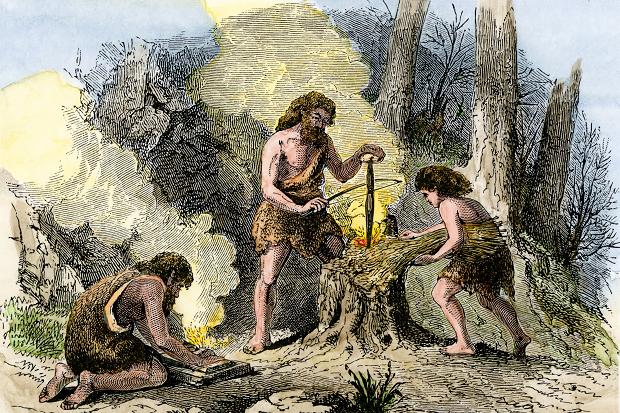
Humans discover fire.
The food rules for early man were simple: eat what you can get. Lacking discerning palettes, these opportunistic hunters were most likely consuming contaminated meat, poisonous mushrooms and indigestible grains. The meat from abandoned carcasses? On the menu. The sickest, weakest animals? A quick and easy appetizer. The variety of microbial fauna they frequently ingested has been preserved for posterity in the form of coprolites (fossilized feces). These generous deposits give us a glimpse of their diet as well as the pathogenic organisms therein.[1] Continue reading
Bon Appetit Wednesday! Grilled Butter Miso Corn
 This week we’re bringing you an ancient flavor of Japan, miso, paired with a staple of summer barbecues, corn on the cob. The salty miso perfectly complements the sweet corn, creating a unique pairing full of flavor and history. Before we start grilling, let’s take a minute to explore the roots of miso, a food that has sustained the Japanese for centuries.
In most cultures around the world today, miso is thought of as a seasoning. The fermented soybean paste has an extreme saltiness, and so most people use only a small amount to flavor their food. However, the Japanese see miso as much more than just a condiment. “It is a basic staple, a concentrated source of protein and other nutrients important enough to be thought of as a full-fledged food.”[1] Continue reading
Posted in Blog, Bon Appetit Wednesday, Culinary, Culture
Tagged ancient history, ancient recipes, AntiquityNOW, Bon Appetit Wednesday, china, grilled corn, Japan, jiang, miso, soybean
The Ancient Roots of Disney’s Blockbuster Film “Frozen”
 In our previous post, The Disneyfication of Pocahontas and the True Story of Uleleh, we explored the origins of the Disney film Pocahontas and discovered that it has a deeper, more complex history than we thought. In today’s post, we delve into another Disney film, Frozen, which is said to be based on the fairy tale The Snow Queen by Hans Christian Andersen. Interestingly, there are speculations that Andersen’s fairy tales were actually inspired by Norse mythology, so we decided to examine The Snow Queen for these literary remnants. Join us as we peel back the layers of history to see how an ancient culture eventually gave rise to a 21st-century Oscar-winning animated film. Continue reading
Posted in Blog, Celebrities, Culture, Literature, Public Life, Recreation
Tagged ancient history, Anna, AntiquityNOW, Disney, Elsa, Frozen, Hans Christian Anderson, Norse mythology, Odin, Skaði, The Snow Queen
LegacyQuest: Through the Eyes of the Students
 The 2014 LegacyQuest International Children’s Film and Video Festival was a resounding success, but it wouldn’t have been possible without the dedication and hard work of the teachers and students who participated. For students, the projects presented some real challenges. They had to tackle complex subjects, reduce them to their essentials, turn the material into cogent scripts and then tell a story through visuals. The result? A collection of thoughtful and engaging films that proudly represent LegacyQuest and what it hoped to achieve. We at AntiquityNOW wanted to know how the process of creating a LegacyQuest entry affected the students who participated. The slideshow below features quotes from students talking about their experiences. Click here to read the students’ letters in their entirety.
Posted in Blog, Culture, Education, Public Life
Tagged ancient history, AntiquityNOW, film festival, LegacyQuest, student feedback
Bon Appetit Wednesday! Ancient Mesopotamian Palace Cakes From Ur
 Today’s recipe is fit for royalty! This cake was served in the palaces of the ancient Mesopotamian city of Ur and uses one of the most important food staples in ancient Mesopotamia—the date. Ur was located in what is now Iraq and was an important city on the Persian Gulf. It was inhabited from 3800 BCE to 450 BCE. Due to its position on the gulf, Ur became an enormous and hugely influential city trading with countries as far away as India. Its citizens were wealthy and lived unusually comfortable lives compared with those in other Mesopotamian cities.[1] Continue reading
Posted in Blog, Bon Appetit Wednesday, Culinary, Culture
Tagged ancient history, ancient recipes, AntiquityNOW, Bon Appetit Wednesday, date palm, Mesopotamia, palace cakes, Ur
LegacyQuest: A Teacher’s Perspective
The inaugural LegacyQuest International Children’s Film and Video Festival has come to an end, the winners have been announced and we are already looking forward to a fantastic festival in 2015. We wanted to know the reactions of the teachers who decided to use this competition as a way to get their students excited about the ancient past. The following is what Britta Gramer from Morganton Day School had to say. Continue reading




 AntiquityNOW