
 UPDATE! This post was originally published on February 25, 2014. The post below reveals the amazing technology that is helping linguists rediscover languages from our past that were lost long ago. Specifically, it discusses the discovery of a Proto-Indo-European language that was spoken over 6,000 years ago. Today’s update is about saving a language before it becomes extinct. Some young people in Louisiana, United States, are fighting to preserve the language of their people, a little known Native American tribe called the Houma. Continue reading
Category Archives: Science and Technology
The Fable of “The Sheep and the Horses”: Take a Listen to the 6,000-Year-Old Language of Our Ancestors
Posted in Art, Blog, Communications, Computer Technology, Culture, Engineering, Public Life, Science and Technology
Tagged ancient history, AntiquityNOW, Eurasia, language, linguist, Native American languages, Native American tribes Louisiana, Proto-Indo-European, The Sheep and The Horses, translation, United Houma Nation
Strata: Portraits of Humanity, Episode 2, “Metalla Oiassonis: Roman Mining in Northern Spain”
 We are pleased to bring you “Metalla Oiassonis: Roman Mining in Northern Spain,” which is Episode 2 of the new documentary series Strata: Portraits of Humanity, produced by AntiquityNOW’s partner, Archaeological Legacy Institute.
“Metalla Oiassonis” is a film by Felix Ugarte Elkartea of Spain that introduces us to the complex world of ancient mining that the Romans developed at the ancient port city of Oiasso. Oiasso is situated within the modern city named Irun in Spanish and Gipuzkoa in Basque, which is located in Spain near the French border. In the western foothills of the Pyrenees next to the Bay of Biscay stands the granite massif called Aiako Harria in Basque and Peñas de Aya in Spanish. On these slopes one of the chief mining centers of the Iberian Peninsula lasted until modern times. Continue reading
Maps, Part 3: Defining and Explaining our Past, Present and Future

“Gaia spacecraft” by ESA–D. Ducros, 2013
In Parts 1 and 2 of Maps: Defining and Explaining our Past, Present and Future, we explored how the ancients mapped the heavens and how modern space programs capture data today. Amazingly adept we humans have been at duality, both mythologizing and demystifying the worlds around us through time. As we calculate and calibrate and chronicle, we push the boundaries of our known existences and challenge ourselves to see where the impossible can become the possible. Take a look at the Gaia Probe that will map out the Milky Way using a billion pixel camera and two telescopes. The Milky Way was the stuff of dreams for millennia. Now the Milky Way will be rendered with a precision that boggles the mind and unlocks the mysteries that have intrigued the human imagination for centuries. Continue reading
Maps, Part 2: Defining and Explaining our Past, Present and Future

3,600 year old Nebra Sky Disc.
From time immemorial humans have looked to the heavens for the sustenance given by sun and rain, for the celestial bodies that calibrated sowing and reaping, for the gods that needed adulation or appeasement, and for signs that there is a greater power that makes existence more than a throw of the dice. What is it that humans seek in mapping the ground under their feet, the seas that swell up before them and the heavens that arch high above? Continue reading
Maps, Part I: Defining and Explaining our Past, Present and Future
 History can be difficult to understand. The way it is told and interpreted depends on the point of view of a person or a culture, the time period from which it is being viewed and a thousand other variables that affect what is actually perceived as the truth of history. One of the greatest tools for anyone wanting to learn more about the past is often overlooked. Maps do more than tell us how to get where we’re going. Maps give us visual representations of the past. They can illustrate growth and movement of civilizations, the spread of various cultures, patterns that repeat themselves throughout time and so much more. Today we’re bringing you some fantastic resources that will help to illuminate the past and explain it in ways you may never have considered. These are great sites to use on your own or in the classroom. Continue reading
Saving the Past With 3D Printing: An Interview with Dr. Bernard Means, Director of the Virtual Curation Laboratory

Click to view the video interview or scroll down to view it on this page.
In this June 2014 video interview AntiquityNOW spoke with Bernard Means, PhD., who heads up the Virtual Curation Laboratory and is an Instructor of Anthropology and Advisor for the Virtual Archaeology Scanning Team (VAST) at Virginia Commonwealth University in Richmond, Virginia. He discusses what archaeologists are doing to document information and why 3D technology holds a unique place in preservation efforts. In this wide-ranging and lively interview you’ll learn how 3D printing can help preserve ancient sites in areas of conflict and the amazing possibilities afforded in bringing the past alive to teachers, students and those who treasure our global heritage. Continue reading
Strata: Portraits of Humanity, Episode 1, “Sailing Canoe”
We are pleased to bring you “Sailing Canoe,” the first documentary from our partner Archaeological Legacy Institute’s new series, Strata: Portraits of Humanity. This monthly half-hour video series is available online and on select cable channels. Strata is a showcase for unique and diverse stories about the world’s cultural heritage. Stories come from across the globe with segments produced by Archaeological Legacy Institute and dozens of producer and distributor partners around the world. Continue reading
Bon Appetit Wednesday! Seaweed for Thanksgiving?
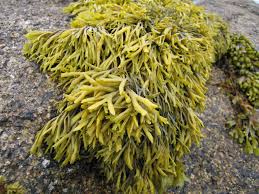 In the past we’ve discussed several ancient superfoods including quinoa, amaranth, honey and even the adzuki bean. Today, we add one more to the list—seaweed, an ancient food from the sea that packs a punch nutritionally, but is often unappreciated by the uninitiated. Not everyone loves seaweed, but maybe they should! Today’s recipe, Carrots with Arame, is an unexpected pairing that will help you bring seaweed to the Thanksgiving table. But first, let’s make sure you can explain to your guests the history behind your curious contribution to the holiday feast. Continue reading
King Tut Controversy: The Controversial Portrait of a Boy King

 Recently Zahi Hawass, prominent Egyptian archaeologist, spoke out against a high profile television program called Tutankamun: The Truth Uncovered produced for the BBC and Smithsonian Channel, saying it “reveals lies, not the truth.”[1] He points out that the reconstruction of the boy king’s face is completely distorted and not based on scientific evidence and that the characterization of his hips as “feminine” is also incorrect and not based in fact. Continue reading
KIDS’ BLOG! Blowing Their Tops: The Destructive History and Amazing Science of Volcanoes

Lava flow from Mount Kilauea. Image credit: Adrian Glover
UPDATE! This post was originally published on September 3rd, 2013. Right now an ancient volcano in Hawaii is causing a lot of trouble for residents. The Kilauea Volcano, located on the Big Island of Hawaii, is actually its youngest volcano, but that doesn’t mean it’s a baby by any stretch of the imagination. It is over 300,000 years old and has been constantly active since prehistoric times. It is one of the world’s most active volcanos and features prominently in many Polynesian legends, including the story of Pele, a volcanic goddess who is said to live in the Kilauea crater.[1] There is even archaeological evidence of the eruptions that have taken place since antiquity. Footprints frozen in time leave reminders of those who have lost their lives to this powerful force of nature.[2] Continue reading




 AntiquityNOW