
 Episode 7 of the new documentary series Strata: Portraits of Humanity, produced by AntiquityNOW’s partner, Archaeological Legacy Institute, considers what we uncover about a society through the remnants of its existence. In this two-part episode we observe how discarded items become touchstones for past lives—relics that capture times, places, memories, social status, gender roles and cultural attributes. And we ponder how future generations will remember us when they come upon what we in the 21st century have left behind. Continue reading
Tag Archives: AntiquityNOW
Strata: Portraits of Humanity, Episode 7, “Historical Archaeology in Downtown Boise” and “South Carolina Pottery Kiln Excavation”
Posted in Architecture, Art, Blog, Culture, Education, Public Life, Strata Curricula
Tagged AntiquityNOW, Archaeological Legacy Institute, Archaeology in Boise, cultural heritage film, cultural preservation, pottery excavation, South Carolina kiln, Strata Portraits of Humanity, The Archaeology Channel
Bon Appetit Wednesday! Ancient Ricotta and a Simply Delicious Tart
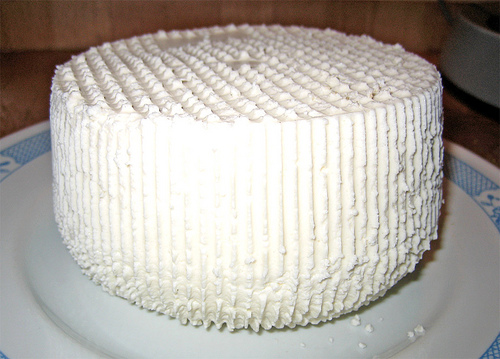
Ricotta. Image credit: Fugzu on Flickr
Did you know that soft, delicious ricotta cheese isn’t really a cheese at all? It’s actually a by-product of cheese-making. We’ve assembled some facts about the history of this extremely versatile “cheese,” along with a simple recipe for a ricotta tart that combined with any seasonal fruit makes for a treat of sweet perfection.
So, ricotta isn’t a cheese. It’s actually a creamy curd that has been cooked twice. The excess whey leftover when making cheese is skimmed off and then recooked, at which point the albumin in the whey solidifies and becomes the ricotta cheese we know and love. Of course, something this delicious has many potential origins, but it almost certainly evolved, as so many ancient foods did, out of necessity. It came from “peasant thrift, dairy farmyard recycling and domestic frugality.”[1] There are a few things we know for certain about ricotta’s past. Continue reading
The Archaeology Channel International Film and Video Festival 2015
 The Archaeology Channel, a program of Archaeological Legacy Institute (ALI), has just completed another successful annual International Film and Video Festival. Packed with insightful and provocative films as well as lively and important discussions on the significance of cultural preservation, this year’s festival touched minds and hearts with its depictions of how precious and vulnerable our world heritage is.
The festival’s mission is:
To exhibit for our audience the wonderful diversity of human cultures past and present in the exploration of our place in history and in our world. To promote the genre and the makers of film and video productions about archaeology and indigenous peoples.
You can see all of the festival’s winners on the TAC website, but we’d like to highlight the winners of Best Film by Jury Vote and Audience Favorite. Each film had an important message to share and did so beautifully, using the art of film to capture the images and stories of the ages. Continue reading
AntiquityNOW Month: Make Something Monday! Bake Quinoa Cookies with an Ancient Grain
 It’s AntiquityNOW Month! Make delicious 5-Minute No Bake Quinoa Cookies using what the Incas’ called the “Mother of all Grains.”
AntiquityNOW Month: Factoid Friday! Hygiene and the Yuck Factor
 What do ashes, animal fat and goat tallow have in common? Find out what the ancient Babylonians, Egyptians, Phoenicians, Germans and Gauls knew about soap and you’ll have your answer. From 2800 BCE we’ve been scrubbing and dubbing ourselves with all manner of cleansers. Learn about the antecedents of modern hygiene and personal care here.
Posted in Blog
Tagged ancient history, ancient hygiene, ancient soap, AntiquityNOW, AntiquityNOW month, Factoid Friday
Buildings of the Future With Foundations in the Ancient Past

UPDATE! This post was originally published on December 16, 2014. In the post below we discussed some ancient building techniques that are being employed in creative and practical ways. These techniques, while thousands of years old, are being utilized in modern constructions because they are sturdy, economical, efficient and sustainable. Today we’re bringing you one more ancient innovation: bamboo. Bamboo is one of the oldest building materials and has been used extensively in South America, Africa and especially Southeast Asia, all areas where it grows in abundance. Incredibly, even though bamboo is strong, beautiful and plentiful, in ancient times it was thought of only as a building material for the very poor.[1] Those who could not afford more lavish materials were forced to pull from their surroundings, and since bamboo was always at hand, it became the most employed. Even today in China, bamboo is referred to as “the poor man’s timber” and is not “accepted as a modern building material.”[2] However, this opinion is rapidly changing as forward-thinking architects around the world have begun to praise bamboo’s unique and valuable qualities. For example, bamboo is light and flexible, and bamboo buildings have been found to withstand earthquakes far better than those made from other more modern materials.[3] Also, while wood can take several decades to mature and be harvested, most bamboo can be harvested after growing for three to six years. In fact, there is one species that only takes two months to mature.[4] Compared to other building materials, bamboo can be processed with relatively little energy and only a limited amount is needed to build an entire house.[5] It can be combined with plywood and steel to create uniquely strong buildings able to withstand natural disasters.[6] Continue reading
Bon Appetit Wednesday! Native American Wojapi
 Wojapi is a traditional Native American dish that has been enjoyed for centuries. We give you fair warning that once you’ve had your first taste of wojapi, you won’t be able to put down the spoon.
Wojapi has been made by Native American tribes for centuries, with each generation passing the recipe down through the family. It is created with a combination of wild berries that can be found growing on the Great Plains, corn flour and honey. One of the favored berries for the recipe is the chokecherry. Used extensively by the North American Native tribes, the chokeberries were ground up, including the stones, and used in soups, stews, pemmican and even with salmon or salmon eggs.[1] (Speaking of pemmican, check out our blog post and recipe for this ancient dried meat jerky.) The bark and even the roots of the chokecherry trees were used in medicines to treat a host of illnesses.[2] Continue reading
A Modern Makeover for an Ancient Religion: The Norse Gods Find a New Earthly Home
 We see them on the big screen, bashing about aliens and each other, ruling over fantastical worlds and wielding extraordinary weapons. Their hair is perfect, muscles rippled and jaw chiseled. While Anthony Hopkins, Chris Hemsworth and Tom Hiddleston do a remarkable job of portraying the Norse gods Odin, Thor and Loki, it is likely few moviegoers are aware these are not just superheroes, sprung from the mind of a talented writer. These are important figures in an ancient religion. And now, after thousands of years, the Norse gods are getting a brand new temple, the first since the Viking age. Before we explore this new phase of the Norse religion, let’s venture into its past and find out how it all began. Continue reading
Posted in Architecture, Blog, Celebrities, Culture, Public Life, Religion
Tagged ancient history, ancient religion, AntiquityNOW, Loki, Norse gods, Norse mythology, Odin, Thor, Vikings
AntiquityNOW Month: Make Something Monday! Build Your Own Great Wall of China
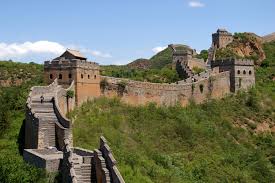 It’s AntiquityNOW Month! The Great Wall of China was built more than 2,500 years and remains one of the world’s most remarkable projects of antiquity. Construct your own Great Wall of China and explore life under China’s first emperor in Yesterday’s Child.
AntiquityNOW Month: Factoid Friday! The Coffee Bean’s Jittery History

John Frederick Lewis, The Coffee Bearer, 1857
In 15th century Turkey a woman could legally divorce her husband if he didn’t keep her well supplied with coffee. Learn more about the nefarious and splendiferous legacy of this enduring brew here.
Posted in Blog
Tagged ancient history, AntiquityNOW, AntiquityNOW month, Factoid Friday, history of coffee, Turkish coffee




 AntiquityNOW