
 In our exploration of ancient foods and recipes, we’ve often found that ancient people not only ate extremely healthy foods, they also ate some things that seem very unusual to us today. We’ve learned that ancient Britons ate nettles, the Greeks and Romans ate fish sauce doughnuts and in ancient Japan they fried maple leaves! Today we’re bringing you another unusual but delicious recipe straight out of an ancient Roman cookbook. Although you may never have considered eating ostrich, it is actually a highly nutritious form of protein. The accompanying sauce in the recipe, which is quite savory, is adaptable for other meats as well. (You can substitute turkey or beef steak for the ostrich.) Continue reading
Category Archives: Culture
Bon Appetit Wednesday! Ancient Roman Ostrich Ragoût
KIDS’ BLOG! Proverbs I: Timeless Words and the Soul of a People

Book of French proverbs published in 1845.
Every culture has a story to tell, and that story is told in many ways. Artifacts, legal records, letters, journals, art, music, dress, even the detritus of daily life uncover the ways of a people. Values and mores are realized through rituals, religions, oral and written histories, monuments and palaces, and many more touchstones of culture. In particular, language and the expressive arts have produced some remarkable observations of lives lived long ago. Continue reading
Strata: Portraits of Humanity, Episode 3, “Turkey’s Anatolia” and “English China Shipwreck”
 This month we’re pleased to bring you Episode 3 of the new video newsmagazine series, Strata: Portraits of Humanity, produced by AntiquityNOW’s partner, Archaeological Legacy Institute. In this two-part episode we explore the diverse cultural antecedents of the eastern and southeastern Anatolia region in Turkey as well as a 19th century shipwreck in Florida. Continue reading
Bon Appetit Wednesday! Mix It Up With a Mead Cocktail for the Super Bowl
 The Seahawks and Patriots are playing in the National Football League’s Super Bowl XLIX in the United States this Sunday. There’s lots of planning to do before you throw the Super Bowl party of the century. You’re probably stocking up on chips, dip and of course beer, but maybe this year you should consider serving your guests a different libation. We’re bringing you a simple recipe that features what is believed to be the first alcoholic beverage: mead. Surprise your fellow fans with this ancient drink and impress them with a bit of history behind its main ingredient. And just in case you want to prepare for next year’s big game, we’re also providing an easy and delicious recipe for making your own mead. Get started early, though. It takes about six months to mature. Continue reading
Bon Appetit Wednesday! Ancient Magical Kefir

Image courtesy of Yuriybrisk on Wikimedia Commons.
We’ve written before about the benefits of looking to our past for nutritious foods. Many ancient cultures thrived in part because of the healthy, natural staples in their diets such as amaranth and quinoa in Mesoamerica, the adzuki bean in Japan and seaweed in Asia and the British Isles. Today, we’re bringing you a recipe for a delicious smoothie that features an ancient ingredient called kefir. It’s the perfect nutrient-packed start to your morning. Continue reading
Tattoos and the Body as Canvas: Erasing the Past With Modern Tattoos
 We’ve written before about tattoos in our post Tattoos and the Body as Canvas. How from ancient times people have etched into flesh the story of their lives. From designs that heighten beauty, signify status, show affiliation or even scourge a social outcast, tattoos have always been about designations. Indeed, our body as canvas is at once both intimate and public. For some, tattoos depict their innermost beings for the world to see. For others, particularly when used to announce a person’s outlier status in society, tattoos are meant to be felt as a visceral destruction of self. Continue reading
Posted in Beauty, Blog, Crime, Culture, Healing Arts, Human Rights, Public Life, War and Violence
Tagged ancient art, ancient history, ancient tattoos, AntiquityNOW, Basma Hameed, scar removal, tattoos over scars
Bon Appetit Wednesday! West African Jollof Rice
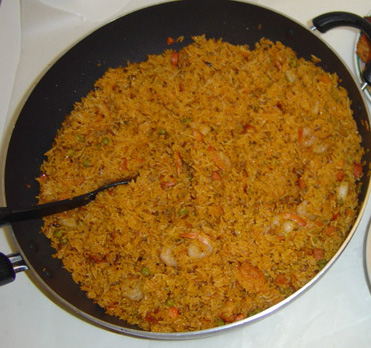 It’s an explosion of flavors, a mingling of ingredients, that creates a perfect symphony of taste. Jollof rice, or “one pot” in the Jolof language, is thought to be the original dish behind the Cajun favorite called jambalaya.[1] Jollof rice can be found in all corners of West Africa, with different regions claiming their own recipes. Each variation boasts a history with roots as deep as the culture in which it originally made its appearance. But to tell the true tale of jollof rice is to tell the story of the Wolof tribe. Continue reading
Ancient Egyptian Blue: How the World’s First Synthetic Pigment Is Producing Tomorrow’s Brave—and Colorful–New World
 Have you ever noticed that the AntiquityNOW website has splashes of a particular set of vibrant colors? Perhaps you’ve even found the Our Colors section on our site that reveals the ancient history behind our beauteous array. One color, specifically the deep blue, is particularly intriguing with its 4,500-year-old past, its surprising relevance for today’s scientific inquiry and its future promise for such fields as medicine and communications technology. Continue reading
The Fable of “The Sheep and the Horses”: Take a Listen to the 6,000-Year-Old Language of Our Ancestors
 UPDATE! This post was originally published on February 25, 2014. The post below reveals the amazing technology that is helping linguists rediscover languages from our past that were lost long ago. Specifically, it discusses the discovery of a Proto-Indo-European language that was spoken over 6,000 years ago. Today’s update is about saving a language before it becomes extinct. Some young people in Louisiana, United States, are fighting to preserve the language of their people, a little known Native American tribe called the Houma. Continue reading
Posted in Art, Blog, Communications, Computer Technology, Culture, Engineering, Public Life, Science and Technology
Tagged ancient history, AntiquityNOW, Eurasia, language, linguist, Native American languages, Native American tribes Louisiana, Proto-Indo-European, The Sheep and The Horses, translation, United Houma Nation
Bon Appetit Wednesday! Ancient Nettle Pudding—Britain’s Oldest Recipe
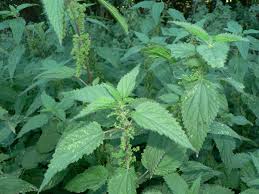 Why would anyone ever want to eat something called a “stinging nettle?” Well, because it’s delicious and nutritious! Our ancient ancestors knew the value of this unhappily named plant and you can still enjoy it today. This week we’re bringing you a recipe for an ancient Nettle Pudding. For those of you not familiar with non-dessert puddings, it has the consistency of a dumpling and is often eaten with chunks of bread and the meat it is cooked along side. Continue reading




 AntiquityNOW