Category Archives: Education

The Archaeology Channel International Film and Video Festival 2015

TAC IFVFThe Archaeology Channel,  a program of Archaeological Legacy Institute (ALI), has just completed another successful annual International Film and Video Festival. Packed with insightful and provocative films as well as lively and important discussions on the significance of cultural preservation, this year’s festival touched minds and hearts with its depictions of how precious and vulnerable our world heritage is.

The festival’s mission is:

To exhibit for our audience the wonderful diversity of human cultures past and present in the exploration of our place in history and in our world.  To promote the genre and the makers of film and video productions about archaeology and indigenous peoples.

You can see all of the festival’s winners on the TAC website, but we’d like to highlight the winners of Best Film by Jury Vote and Audience Favorite. Each film had an important message to share and did so beautifully, using the art of film to capture the images and stories of the ages. Continue reading

Strata: Portraits of Humanity, Episode 6, “The Somerset Levels and Moors” and “Euskal Jaiak”

StrataImage-webEpisode 6 of the documentary series Strata:  Portraits of Humanity, produced by AntiquityNOW’s partner, Archaeological Legacy Institute, comprises two films that explore the forces that bind us as a people in a particular society. Continue reading

Strata: Portraits of Humanity, Episode 5, “Archaeology in 12 Minutes” and “Photographing the Invisible”

StrataImage-webEpisode 5 of the new documentary series Strata:  Portraits of Humanity, produced by AntiquityNOW’s partner, Archaeological Legacy Institute, is a two-part episode 1) illustrating the history of archaeology and 2) demonstrating one of the technologies used today to recover the amazing artistry of our ancestors. Continue reading

ISIS, Syria and the Eradication of Culture: As the Ancient World Falls, Efforts Mount to Save World Heritage

AN Forum

ISIS has reportedly bulldozed the ancient city of Nimrud.

ISIS has reportedly bulldozed the ancient city of Nimrud.

You’ve probably seen the reports of destruction coming out of the Middle East. You’ve certainly heard of ISIS and its reign of terror. The loss of life and the horrifying atrocities being committed against innocent people are splashed across every news network. But ISIS is doing more than taking individual lives. The group is bent on annihilating ancient culture and what it represents. This part of the news story may not have caught everyone’s eye, but it is a desperately important part of that story. Continue reading

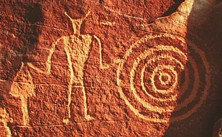
Picture This! Ten Mysterious Examples of Rock Art from the Ancient World

Petroglyph attributed to Classic Vernal Style, Fremont archaeological culture, eastern Utah, USA.

Petroglyph attributed to Classic Vernal Style, Fremont archaeological culture, eastern Utah, USA.

More than 6,000 years ago people were telling stories, but not with words. They captured their lives in pictures on the walls of caves and other rock surfaces.  This was a preliterate time of human existence, or a time before language was written down and people were able to read and write. But the stories these ancients told in pictures still engage the mind in astonishing ways. These chroniclers of their times gave us the gift of ancient sight. We can see how life was lived thousands of years ago just by looking at these artfully painted images.  How amazing is that? Continue reading

To Repatriate or Not to Repatriate, That is the Question….James Cuno’s Case Against Repatriating Museum Artifacts

AN Forum

The Elgin Marbles, one of the most famous cases in the debate over repatriation, are seen here in the British Museum.

The Elgin Marbles, one of the most famous cases in the debate over repatriation, are seen here in the British Museum.

The topic of repatriation of cultural artifacts is hotly contested, with intense opinions and emotions on both sides of the argument. Repatriation of cultural artifacts is a process by which an item is returned to its country of origin. Whether or not an item should be returned to its country of origin may seem like an easy question to answer. Of course a nation’s cultural history should rest with the nation itself. However, the issue is not so simple. Most people agree that when repatriation is requested because an item has been looted and illegally removed from its origin, it should be returned, but when the repatriation request is based solely upon a nation’s claim to their cultural heritage, the issue becomes extremely complicated. There are questions about a nation’s ability to safeguard the item, questions surrounding regions at war and embroiled in violent conflict, issues with humanity’s right to its shared cultural heritage and problems that arise when multiple nations claim a right to the artifact because the original home of the artifact no longer exists. In fact, the topic is so nuanced and is impacted by so many different forces, it is sometimes difficult to figure out which side you’re on. Continue reading

KIDS’ BLOG! Proverbs I: Timeless Words and the Soul of a People

Book of French Proverbs from 1845.

Book of French proverbs published in 1845.

Every culture has a story to tell, and that story is told in many ways. Artifacts, legal records, letters, journals, art, music, dress, even the detritus of daily life uncover the ways of a people. Values and mores are realized through rituals, religions, oral and written histories, monuments and palaces, and many more touchstones of culture. In particular, language and the expressive arts have produced some remarkable observations of lives lived long ago. Continue reading

Image

In Honor of Martin Luther King Jr.

Martin_Luther_King,_Jr. copy

Happy 2015! Here Are Your Free Gifts From AntiquityNOW!

We hope your holidays were joyous and accompanied by good cheer, good company and good food. We wanted to make sure that in the midst of all the holiday celebration you received your free gifts from AntiquityNOW. Just click on the links below.

2014 Recipes With a PastRecipes 2104 Ebook FINAL

Enjoy our e-cookbook with delectable recipes from our Bon Appetit Wednesday! blog posts. Each recipe includes a brief explanation of the food’s ancient origins—with many surprises sure to tickle the imagination along with the palate.

Education Topic Matrix

BlankMap-World darkNew this year! AntiquityNOW has a variety of free content to supplement the classroom curricula, all organized by region/era and including fun facts, educational projects, videos, lessons and more showing how ancient lives continue to influence us today.  Who knew the first computer was built more than 2,000 years ago in Greece? That bubble gum was discovered from 3,000 BCE in Finland? Or that the ballgame was created in Mesopotamia in 1400 BCE? We knew because at AntiquityNOW we love to make those eye-popping, jaw-dropping connections. As we like to say, “The past is not as distant as you may think.” Like what you see?  Let us showcase your best ideas revealing how past and modern times intersect. Please go to “Submit Work.”

Bookmarks

Bookmark single image high resWe’ve added more bookmarks, including for the two projects above, to download for you archaeologists, teachers, students, cultural preservationists, puzzle aficionados, Trivial Pursuit enthusiasts and historical gadflies everywhere.

**************

Join us in cherishing and preserving our global heritage. Contact us at info@antiquitynow.org to learn how. Let’s make 2015 a year to remember.

**************


Strata: Portraits of Humanity, Episode 2, “Metalla Oiassonis: Roman Mining in Northern Spain”

StrataImage-webWe are pleased to bring you “Metalla Oiassonis:  Roman Mining in Northern Spain,” which is Episode 2 of the new documentary series Strata:  Portraits of Humanity, produced by AntiquityNOW’s partner, Archaeological Legacy Institute.

“Metalla Oiassonis” is a film by Felix Ugarte Elkartea of Spain that introduces us to the complex world of ancient mining that the Romans developed at the ancient port city of Oiasso. Oiasso is situated within the modern city named Irun in Spanish and Gipuzkoa in Basque, which is located in Spain near the French border.  In the western foothills of the Pyrenees next to the Bay of Biscay stands the granite massif called Aiako Harria in Basque and Peñas de Aya in Spanish.  On these slopes one of the chief mining centers of the Iberian Peninsula lasted until modern times. Continue reading