Category Archives: Science and Technology

AntiquityNOW to Partner With Ancient Origins

AN News Grey

AntiquityNOW is pleased to announce a new partnership with Ancient Origins, an organization that “seeks to uncover…one of the most important pieces of knowledge we can acquire as human beings—our beginnings.” Ancient Origins offers “a reconstruction and retelling of the story of our beginnings through an exploration of lost civilisations, sacred writings, ancient places, unexplained artifacts, scientific mysteries and more.” AntiquityNOW also explores these antecedents and as well draws comparisons to modern times to show that antiquity continues to inform and influence our lives today.
Ancient OriginsThrough joint blogs and educational content the partnership will promote cultural heritage and the importance of appreciating our shared world history.

In today’s popular culture young people are exposed to diverse ideas from numerous perspectives, both scientific and speculative. AntiquityNOW and Ancient Origins are interested in current archaeological and scientific discoveries but are also intrigued by the unknown questions of human existence.  Ancient Origins’ view is that “there still exists a multitude of anomalies and mysteries in humanity’s past that deserve further examination.”  Embracing that concept, AntiquityNOW’s approach is to create educational material for children designed to develop critical thinking skills, teach the importance of research and realize the value of a curious and open mind.

Ancient Origins has offices in London, England and Springwood, Australia.  AntiquityNOW is incorporated in New York, NY.
Science Fiction or Uncovered Truth: The Enigmatic Origins of Crystal Skulls

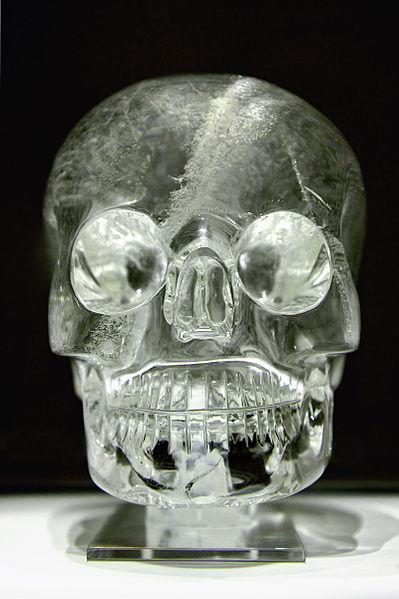
The crystal skull. Collection of the British Museum in London. Image courtesy of Rafał Chałgasiewicz

The crystal skull. Collection of the British Museum in London. Image courtesy of Rafał Chałgasiewicz

Another entry in AntiquityNOW’s new Science Fiction section is a story that has bedeviled skeptics and believers alike.  The origins and purpose of the crystal skulls have been debated for years, but Eric Vassalo, who submitted portions from his blog post on the subject to AntiquityNOW,  is a cynic regarding traditional inquiry.  He wanted to analyze for himself what these crystal skulls were all about.  As part of a group exploring sites containing these artifacts in Mexico, he mused:

Like a group of mutant X-men we all shared our fascinating and surreal stories of how we came to be in this place doing what so few dare to do, challenge our spoon-fed history and attempt to get at the truth.

Continue reading

Bon Appetit Wednesday! Celebrate the Ancient Marshmallow with a S’more Pie

Marshmallows_in_soft_yellow_and_blue_lightHere’s a recipe just suited to commemorate AntiquityNOW Month in May.

Weightless pillows of sweet perfection, light as air and oh so heavenly. Drop them in a steaming cup of chocolate, use them to bind cereal into gooey deliciousness or simply pop one in your mouth and let it dissolve into pure sugary delight. The marshmallow with its mass-marketed, brightly colored, supermarket incarnations may seem like a truly modern candy, but in reality, like so many things, it was born in our shared ancient history. Let’s take a look at its past before we share with you a recipe from its present, a decadent S’more Pie. Continue reading

AntiquityNOW Month and Ancient Horrors: Introducing Paul Hodge

This month we are premiering AntiquityNOW’s Science Fiction section. The horror story is a close relative of science fiction with today’s audiences, whether those tales of horror take place in outer space or a country churchyard.  With a nod to the enduring appeal of both genres, this tale by Paul Hodge conjures up ancient folklore (going back to Mesopotamia and ancient Greece and Rome) and a sense that death is sometimes not all that it appears to be.

paul hodge

Paul (P.J.) Hodge

Paul Hodge left London and came to reside in Hampshire armed with the collected works of MR James, Kate Bush and Nigel Kneale. He now trawls the dusky corners of the country seeking stories to entertain (and scare). These form part of his own collected works and blog, Freaky Folk Tales. Hodge will also be contributing his imaginative stories to Today’s Muse, AntiquityNOW’s creative section.

Enjoy his tale The Churchyard Horror below. Continue reading

It’s National Poetry Month! Ancient Poetry and the Created Self: From Early Epics to Afghan Women’s Landays

Marble terminal bust of Homer. Roman copy of a lost Hellenistic original of the 2nd c. BC. From Baiae, Italy. In the British Museum.

Marble terminal bust of Homer. Roman copy of a lost Hellenistic original of the 2nd c. BC. From Baiae, Italy. In the British Museum.

Throughout time, poetry has been one of the most evocative of art forms.  From ritual chanting and epic histories to love sonnets and modern free verse, poetry has represented the essence of what it is to be human.  Since April is National Poetry Month in the United States, let’s take a look at the origins of this artistic device.  As well, we’ll observe a unique poetry tradition recast with a 21st century perspective. We’ll see how poetry is giving voice to women in Afghanistan, who as with early cultures that forged their identities in verse, are tapping the extraordinary power of poetry to create their own sense of “self.” Continue reading

A Place Called Home: Earth Day, Ecopsychology and an Urban Legend

earth_day_2010_by_CrypticDisdain

What is this connection with the earth that we humans cling to so tenaciously?  As a species we obviously are dependent on the air to breathe, the water and soil that nurture us, the sun whose fiery presence holds us in its eternal circle.  But the earth is more than the elements that give us life.  The earth holds millions of memories in the folds of its mountains, across the tapestry of its lands and in the rhythmic singing of its seas. For we as humans attach ourselves to this earth, not just for nurturance, but by the profound evocations of time, memory and place. Continue reading

Music Origins: Mesopotamia, American Gospel and the Neurology of Faith, Part II

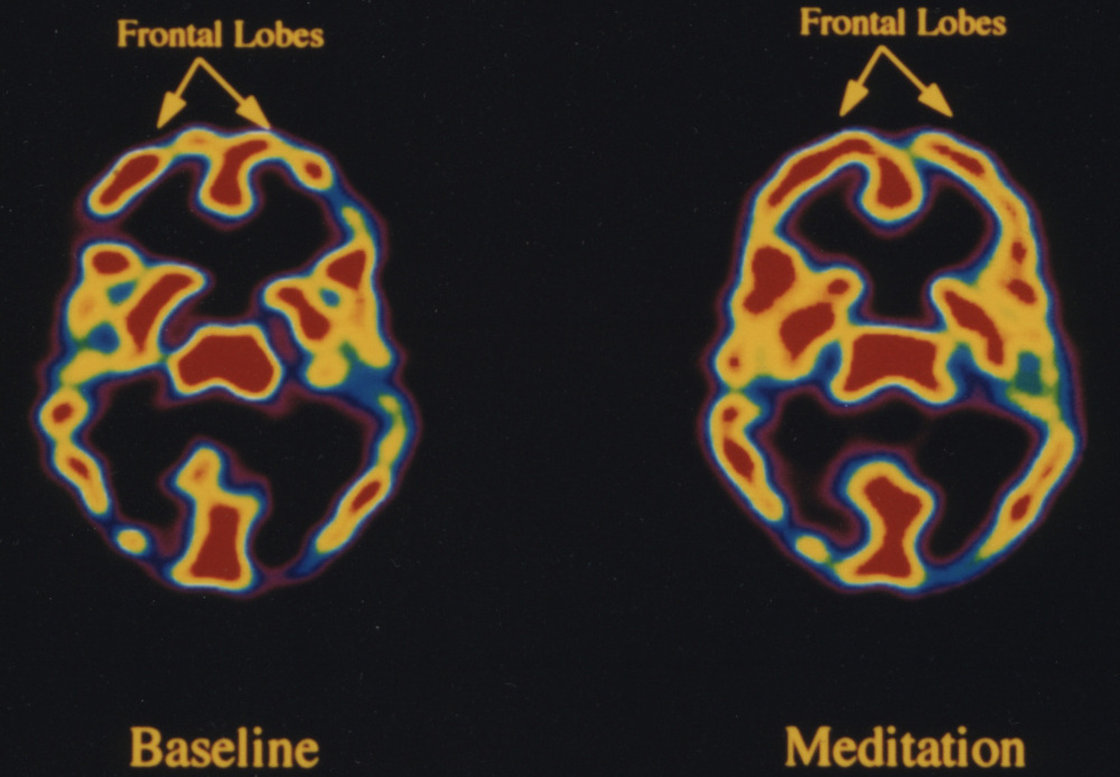
Image courtesy of Andrew Newberg, NPR.

Image courtesy of Andrew Newberg, NPR.

In Part I we looked at the importance of music in Mesopotamia and its specific role in communing with the gods. Fast forwarding nearly four millennia we found a remarkable similarity in the strains of American gospel music and the belief that the ecstasy of song enables the Holy Spirit to enter the bodies of the faithful. What is the nature of this willingness to give up one’s self to a higher being? How does music play a part? Is rapture—a potent driving force among believers—real?  Let’s look further at the reason for this music/spiritual connection by venturing inside the anatomy of the brain and as well exploring humankind’s long and precarious evolution of mind and body. Continue reading

Music Origins: Mesopotamia, American Gospel and the Neurology of Faith, Part I

Mesopotamia instrumentsThrough the centuries many forms of music have arisen out of mystical or spiritual ardor:  Indian ragas, Japanese Shinto music, Madih nabawi or Arabic hymns, the classic liturgical anthems of Europe and American gospel.  Whether by the pounding of drums or the sonorous stones of Stonehenge or the arpeggios echoing against ancient cathedral walls, worship through music has defined civilizations from early times.  What is this power in music that moves humans to seek their deities in notes, rhythms and sounds? Let’s look at two very different cultures with surprisingly similar perspectives. Continue reading

Modern Technology Brings the Dead Sea Scrolls to Life

800px-The_Great_Isaiah_Scroll_MS_A_(1QIsa)_-_Google_Art_Project-x4-y0The discovery of the Dead Sea Scrolls is undisputedly one of the most important archaeological moments of the last several centuries. In 1947 hundreds of ancient scrolls, including the oldest copy of the Hebrew Bible were found in a remote Judean Desert cave giving us an unprecedented insight into the society, religion and language during the Second Temple Period. To gaze upon and study these scrolls is an incredible opportunity that few have had up to this point. However, thanks to a collaboration between Google and the Israeli Antiquity Authority, anyone with an internet connection is now able to view these stunning pieces of history in high definition. Using the most advanced and innovative imaging technology, the IAA has imaged and uploaded the scrolls to a public online digital library and they’ve recently revamped their website to make the experience even more user-friendly. Technology is once again giving us the ability to understand and appreciate our past. Continue reading

KIDS’ BLOG! Archimedes’ Ancient Screw Saves 21st Century Britain From Flooding

Spaans-BabcockWhat do you do when the rains keep coming and floods sweep across your country? As the waters rise and cover your fields and towns, what do you use to save your home? Do you write a fancy new computer program, download the newest anti-flooding app on your phone or design complicated modern robots to deal with it? Well, people in the United Kingdom are facing this very problem and you might be surprised to learn they aren’t turning to modern technology. Instead, they’re looking back to one of antiquity’s greatest scientists and inventors, Archimedes, and to his giant water screws.

Continue reading