
 The latest offering in the video news-magazine series Strata: Portraits of Humanity, produced by AntiquityNOW’s partner, Archaeological Legacy Institute, examines an elaborate structure of more than 90 small coral islands often called the “Venice of the Pacific.” Much of the construction and purpose of these islands is shrouded in mystery, but their unique beauty continues to inspire a reverence today for the impressive talents of ancient lives. Continue reading
Strata: Portraits of Humanity, Episode 12, “Ruins of Nan Madol”
Bon Appetit Wednesday! African Nightshade
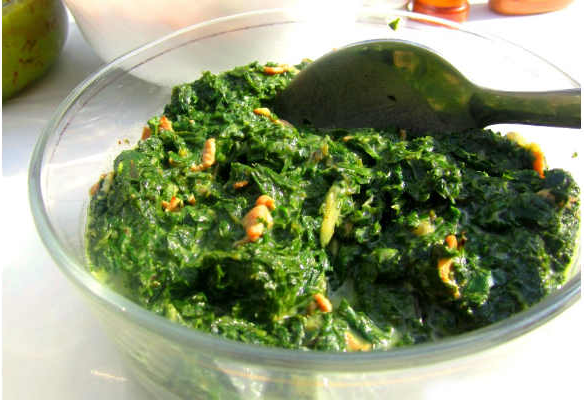 “Eat your greens and you’ll grow big and strong!” Since childhood we’ve been taught the importance of eating leafy green veggies, but that never seemed to persuade our minds or palates. But times have changed, and as a surprise to our younger selves, it seems that greens are getting more and more popular. No longer do we run from kale, or hide our collards under the napkin. Today, greens are all the rage. In fact in Africa, restaurants are increasingly turning to ancient, indigenous species to invigorate their menus and bring back a taste of the past. One of the most popular veggies making a comeback is the African Nightshade. Today, we’re bringing you a recipe for Cream of Nightshade Spinach. Spoiler Alert: There’s no spinach involved. Continue reading
DON’T MISS OUT! Call for Entries for 2016 LegacyQuest International Children’s Film and Video Festival

Letter of Intent Deadline- December 11, 2015
Final Entry Submission Deadline- February 26, 2016
Not sure how to get started with your LegacyQuest video submission? We’re here to help! First, check out our page called Tips for Making a Video for LegacyQuest. Next, think about what interest and excites you. Do you like art, science, cooking, video games, reading…? Whatever your passion, there’s a fascinating link to the past that you can explore. Feel free to contact us for help getting inspired to make the best video ever!
View our invitational video below and visit our webpage for details about the festival and how your students can get involved!
The Believing of Seeing, Part 2: The World of a Modern Day Psychic

An Oracle Turtle Shell. Tortoise plastron with divination inscription from the Shang dynasty, dating to the reign of King Wu Ding. Held at the National Museum of China in Beijing.
In Part 1 of The Believing of Seeing, we examined the Oracle of Delphi and its importance in the ancient world. Today we meet a modern day psychic who shares with us her own insights into her gift of foresight.
Jeannie Reed is a professional psychic with an international clientele. For thirty years she has practiced her craft. She believes that each of us has psychic ability that only needs to be nurtured and developed to be realized. Below she describes her awakening as a professional reader and the evolution of her ability to see what others cannot. Continue reading
The Believing of Seeing, Part 1: The Oracle of Delphi

Priestess of Delphi (1891), as imagined by John Collier; the Pythia is inspired by pneuma rising from below as she sits on a tripod.
This time of year we love to explore all things unexplainable. But while Halloween has become a marketer’s dream, the spirits and forces that we mimic and parody in costumes and lawn ornaments are the stuff that defined ancient lives. Fear of the unknown, obeisance to light and dark forces and importunities to celestial powers were all seminal to the rise and fall of cultures around the world. For this reason, those individuals who had prescient powers were held in particularly high regard. The Oracle of Delphi in ancient Greece is perhaps one of the most famous of these ancient seers. Continue reading
Posted in Blog, Culture, Psychology, Public Life, Religion, Science and Technology, Science Fiction
Tagged ancient hallucinogens, ancient history, ancient oracle, ancient psychics, AntiquityNOW, Apollo, fault lines, Greek gods, Greek mythology, oracle, Oracle at Delphi, psychics, Pythia, Pytho, vapors
Bon Appetit Wednesday! National Dessert Day
 October is a month packed with celebrations of culinary delights. Last week we sampled the ancient and delicious history of seafood and today we’re honoring our sweet tooth. Humanity has always loved to indulge in something deliciously decadent. From Cleopatra’s favorite Tiger Nut Sweets to the Mesopotamian Palace Cakes of Ur, there are so many wondrous ways to enjoy dessert spiced with a bit of antiquity. Below you’ll find the recipe for Tiger Nut Sweets, also called Dulcis Coccora, along with a list of some of our favorite Bon Appetit Wednesday dessert recipes. Happy National Dessert Day! Continue reading
Fact or Fiction? Ancient Scary Turnips
 Pumpkins in North America are ubiquitous this time of year, and they are no more evident than on Halloween, when they are on display carved with frightening faces to ward off evil spirits. But did you know that in the Middle Ages in Europe, as a pagan vestige against the growing wave of Christianity, hideously carved turnips were the vegetable of choice to spook the spirits?
Fact or Fiction?
Scroll down for the answer!

FACT! As the conversion to Christianity took root in the Middle Ages, pagan influences remained, which was the case with Halloween. It was believed that spirits roamed freely on this fateful night. Turnips were carved in the form of demons to keep evil spirits away. Since the pumpkin was more abundant in America, it became the much more colorful and rotund symbol of nefarious spirits as the Halloween tradition crossed the pond.
Click here to learn more about historic Halloween traditions and to read a scary story about a ghost hunter.
Bon Appetit Wednesday! National Seafood Month

Ancient mosaic in an Egyptian burial tomb, circa 1400 BCE.
It’s National Seafood Month in the U.S., and when it comes to ancient eats, you can’t get more ancient than seafood. The bounty of the oceans has sustained mankind since prehistoric times. In fact, analysis of the lower mandible of a 40,000-year-old human skeleton, found in the Tianyuan Cave near Beijing, found the man ate fish regularly.[1] We also have ample archaeological evidence from the Paleolithic period including shell middens, discarded fish bones and even petroglyphs and cave paintings that prove humans have been enjoying seafood since before recorded history began.
So today we’re bringing you some Bon Appetit Wednesday recipes that will help you to celebrate National Seafood Month in ancient style. Each recipe is accompanied by a bit of history of the dish and its ingredients. Cook up a seafood feast for your family and friends and then dazzle them with your knowledge of the ancient past!
- Chilled Stone Crab Claws with Mustard Sauce
- Double K Grilled Salmon
- Vatapa de Peixe e Camarao (Fish and Shrimp Stew)
- Grandma Joyce’s Fishcakes
- Sabzi Polo Mahi
- Salmon Kiliwan (Filipino Ceviche)
- Spaghetti with Olive Oil and Italian Fish Sauce
[1] First direct evidence of substantial fish consumption by early modern humans in China. (n.d.). Retrieved October 6, 2015.
Author PJ Hodge Presents “The Viaduct (A Ghost Story)”
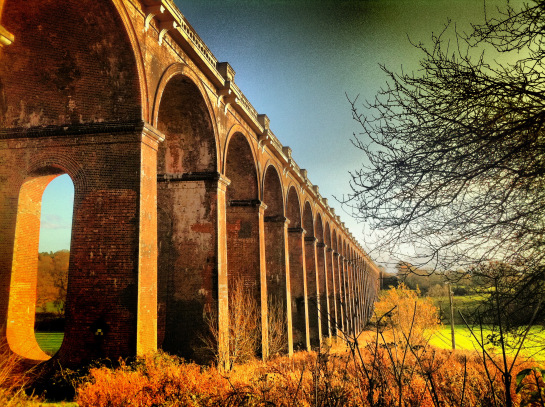 It’s that time of year again that with frissons of delight we delve into the dark world of ghosts and goblins. And again we turn to author P J Hodge as he takes us on a tale of trauma and memory in the English countryside. His stories often draw from ancient themes that transcend time and culture, where the dimensions of existence blur between this world and what lies beyond. Continue reading
Posted in Blog, Culture, Engineering, Holidays, Literature, Public Life, Science Fiction
Tagged ancient history, AntiquityNOW, aqueduct, ghost stories, ghost story, Roman aqueducts, scary stories, scary story, viaduct
KIDS’ BLOG! Write Your Own Tale of Terror!
 What words best describe Halloween? Spooky? Scary? Terrifying? Like many of us, you probably like to be scared. Well, this Halloween we’re giving you the chance to really strut your creative stuff. You get to write your own tale of terror. But we at AntiquityNOW are giving you a challenge. We’re providing you the beginnings and endings of stories, which means you pick one beginning and one ending to bookend your story. And—drum roll—you must include an element of ancient history in your story. Just look around at today’s books and movies. How many have to do with time travel to an ancient place, an artifact that has magical powers or a mystery that had its origins in Ancient Egypt or Rome or Mesopotamia? The distant past is filled with possibilities for storytelling. Continue reading



 AntiquityNOW