Super Bowl XLVII and the Superstars of Ancient Rome

Detail of the Villa Borghese gladiator mosaic, 4th century CE

Detail of the Villa Borghese gladiator mosaic, 4th century CE

The stadium is hot, packed with roaring fans ready to cheer for their favorite players.  Above the din, vendors are screaming out what foods and souvenirs are for sale.  The city is festooned with colorful advertisements sporting muscle-bound celebrities endorsing the latest products.  Super Bowl 2013?  Think again.   It’s actually ancient Rome.  As the doors open, the gladiators emerge, boldly strutting onto the field for the day’s games.   The crowd goes wild, Roman BCE-style. Continue reading

Suffering the Flu? Be Happy It Isn’t the Plague!

fluThis is the worst flu season since 2010, and we haven’t even hit the official peak of the season, which is typically in February.

The Center for Disease Control (CDC) is calling the outbreak an epidemic. According to Curtis Allen, spokesperson for the CDC, “When the H3N2 virus circulates, we tend to have a more severe season. It can cause more hospitalizations and kill more people ages 65 and over.” In fact, Massachusetts Governor Deval Patrick has declared a state of emergency and ABC named Boston a “city under flu crisis.” Continue reading

Wall Posts: Putting Pompeii’s Political Graffiti in a Modern Context

Do you instantly share your amazing dinner on Instagram?  Post about your political opinion on Facebook?  Find a liked-minded community through LinkedIn? Perhaps our ancestors had similar feelings about their social networking systems.

While part of online social networking is creating an identity, the main purpose is to create connections with others and add to the conversation.   In today’s hypercaffeinated online world, we get excited if a celebrity or important organization re-tweets us. We feel part of something, connected to a person or idea that expands our sense of self. Continue reading

Recent Archaeological Discovery Reveals That in Antiquity Thin Was Out and “Stylishly Plump” Was In

Image courtesy Krzysztof Grzymski

It is resolution time! Popular culture and media are booming with ideas for weight loss– Dr. Oz’s green shakes, CNN’s stories of inspiration, The Biggest Loser’s dedication to stopping childhood obesity and countless advertisements for gym memberships. According to the website Statistic Brain, resolutions to lose weight ranked number one on a list of top resolutions in 2012 and it is safe to assume 2013 will be no different. Continue reading

Happy New Year!…Trick or Treat?

Imagine celebrating the New Year on Halloween. Ghosts, costumes, candy, parties, fortune tellers, bonfires- and champagne toasts at midnight!  Our modern Halloween was not always about trick or treating and carving pumpkins. It was influenced by numerous other traditions, including the celebration of the Celtic New Year.

CELTIC INFLUENCE

Modern day offerings for the Samhain festival. Image courtesy of Avia Venefica on Flickr.

The largest influence on our modern Halloween is Samhain: the Celtic New Year celebration that fell roughly on October 31st – November 1st.  Celts believed that on the evening of the New Year souls of the dead could return to Earth.   Continue reading

KIDS’ BLOG! Hot Chocolate: Making Kids Happy for More Than 1,000 Years!

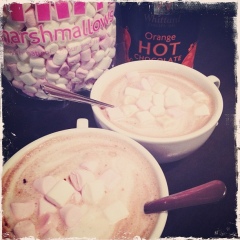
Image courtesy of anka @ happyhangaround

Image courtesy of anka @ happyhangaround

Do you love a cup of hot chocolate with lots of sweet marshmallows? Did you know that kids just like you drank hot chocolate over a thousand years ago?

The Maya people in Northern Belize were drinking hot chocolate as far back as 600 BCE.  Although many people think that the Mayas discovered chocolate, the Olmec people who lived in Mexico from 1500-400 BCE were actually drinking a chocolate concoction even earlier. Do you enjoy your food with some extra zing? In their book The History of Chocolate, Sophie and Michael Coe describe how  the Olmec crushed the cacao beans, mixed them with water and spices, and then added chilies and herbs for a spicy drink. Or maybe you would have enjoyed some of the other things the Olmec added to their chocolate, such as honey for a sweeter drink and also flavorings from flowers and vanilla. Continue reading

Why January 1st?

Free-New-Years-Clip-ArtDid you celebrate the New Year with fireworks and champagne this year or did you take a polar bear plunge into a freezing body of water? No matter how you celebrated, you probably did it on January 1st. While there are many different cultural celebrations of the New Year, our globalized world generally agrees that the New Year starts on January 1st. It may seem common to us now, but this date was not always standard.

Continue reading

Hot Chocolate: Gift of the Gods Since 1900 BCE

Image courtesy of masatoshi_

If you think hot chocolate is just a modern day treat, you may be surprised to discover that the Maya people in Northern Belize were drinking hot chocolate as far back as 600 BCE, and even more intriguing, other evidence supports the use of chocolate much earlier than that.

Continue reading