
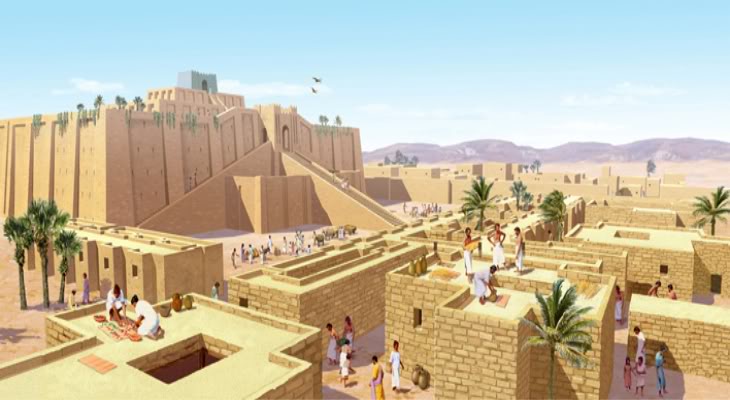
 Today’s recipe is fit for royalty! This cake was served in the palaces of the ancient Mesopotamian city of Ur and uses one of the most important food staples in ancient Mesopotamia—the date. Ur was located in what is now Iraq and was an important city on the Persian Gulf. It was inhabited from 3800 BCE to 450 BCE. Due to its position on the gulf, Ur became an enormous and hugely influential city trading with countries as far away as India. Its citizens were wealthy and lived unusually comfortable lives compared with those in other Mesopotamian cities.[1] Continue reading
Category Archives: Blog
Bon Appetit Wednesday! Ancient Mesopotamian Palace Cakes From Ur
Posted in Blog, Bon Appetit Wednesday, Culinary, Culture
Tagged ancient history, ancient recipes, AntiquityNOW, Bon Appetit Wednesday, date palm, Mesopotamia, palace cakes, Ur
LegacyQuest: A Teacher’s Perspective
 The inaugural LegacyQuest International Children’s Film and Video Festival has come to an end, the winners have been announced and we are already looking forward to a fantastic festival in 2015. We wanted to know the reactions of the teachers who decided to use this competition as a way to get their students excited about the ancient past. The following is what Britta Gramer from Morganton Day School had to say. Continue reading
AntiquityNOW Celebrates National Pet Month
For thousands of years humans have had a complex relationship with animals. Food, protection, companionship–animals have been an inextricable component of society from its earliest formations.
We’ve been celebrating AntiquityNOW Month in May. But we are proud to share this special time with National Pet Month. What better way to celebrate how antiquity lives today than to show the importance of our animal companions through time?
Posted in Art, Blog, Culture, Holidays, Public Life, Recreation, Sports
Tagged ancient animals, ancient history, ancient pets, AntiquityNOW, Argos, Caspian horse, falconry, mummified animals, National Pet Month, Pekingnese, Shih Tzu
Bon Appetit Wednesday! Kheer: Ancient Indian Rice Pudding
 This week we’re bringing you a sweet, exotic treat from India. Kheer is a rice pudding made in several variations across South Asia and of course, it has a history! Also called payasam, this ancient dessert comes from the Hindi culture and is most often seen at ceremonies, feasts and celebrations, although it can easily be enjoyed any time of year. Continue reading
Posted in Blog, Bon Appetit Wednesday, Culinary, Culture, Public Life, Religion
Tagged ancient history, ancient recipes, AntiquityNOW, Bon Appetit Wednesday, Hindu, kheer, Lord Krishna, payasam, rice pudding
The Knossos Dolphin: Create Your Own Piece of Art Inspired by Antiquity with Dan Fenelon
 In honor of AntiquityNOW Month, our Artist-in-Residence Dan Fenelon has created a paint by number activity using one of his paintings inspired by the Minoan “Fresco of the Dolphins” on the island of Knossos. The fresco is from the Palace of Knossos located just south of modern-day Heraklion near the north coast of Crete. The palace was built by the Minoans around 1950 BCE, but was damaged by an earthquake in 1700 BCE and had to be rebuilt.[1] Commissioned by King Minos, the palace was the creation of the ancient architect Dedalos and was said to have been so complex in its design that no one placed inside its walls could ever find its exit.[2] The second palace built on the remains of the first continued this labyrinthine structure, but included several changes. In his book “Architecture of Minoan Crete”, John McEnroe writes,
In the second Palace, much of the monumental bulk of the earlier building would be lightened through structural innovations and intricate details, and the taste for colored stone would be partly replaced by representational wall paintings.[3] Continue reading
Posted in Art, Blog, Culture, Education, Kids Blog, Kids: Art, Kids: Culture, Public Life
Tagged ancient history, AntiquityNOW, AntiquityNOW month, art history, Crete, Dan Fenelon, Dedalos, Knossos, Minoans
Announcing the Winners of the Inaugural LegacyQuest International Children’s Film and Video Festival
AntiquityNOW and Archaeology Legacy Institute are proud to announce the winners of the 2014 LegacyQuest International Children’s Film and Video Festival. This was LegacyQuest’s inaugural year and we were delighted with the high quality of the entries and all the hard work of the students and teachers who participated. We were selective as to the criteria for the competition, wanting children to have as professional an experience as possible. The entrants certainly lived up to the high standards that were set for them. We look forward to many more successful festivals in the future!
The winners were announced at The Archaeology Channel (TAC) International Film and Video Festival in Eugene Oregon on May 11, 2014. TAC is a program of Archaeological Legacy Institute.
It’s not too soon to think about next year’s LegacyQuest International Children’s Film and Video Festival. Click here for details on the 2015 competition.
And the winners are…
First Prize
Social Media: Dreaming Through the Ages
Morganton Day School, Morganton, NC.
Second Prize
Fashion 2
Baldwin School, Bryn Mawr, PA.
Third Prize
Storytelling 2
Baldwin School, Bryn Mawr, PA.
Honorable Mentions
(in alphabetical order by title and school)
Architecture 1. Baldwin School, Bryn Mawr, PA.
Architecture 2. Baldwin School, Bryn Mawr, PA.
Architecture 3. Baldwin School, Bryn Mawr, PA.
Fashion 1. Baldwin School, Bryn Mawr, PA.
Fashion 3. Baldwin School, Bryn Mawr, PA.
Sports 1. Baldwin School, Bryn Mawr, PA.
Storytelling 3. Baldwin School, Bryn Mawr, PA.
Dancing Through the Ages. Morganton Day School, Morganton, NC.
Echoes of History: The Incredible Sound Effects of Malta’s Hypogeum Hal Saflieni

This is our second blog with our educational partner Ancient Origins for our Science Fiction section. Yes, we’re using science fiction rather broadly in this case, but in this offering by Ancient Origins you’ll see how the unknown conjures up theories of acoustical mind control that are fascinating for the fact that they could very possibly be true. Archaeoacoustics is the study of sound in ancient space, and in this blog about the underground prehistoric temple of Hypogeum of Hal Saflieni you’ll find mind-boggling examples of auditory ingenuity. So let’s go spelunking and hear the captivating sounds of ancient lives. Continue reading
Bon Appetit Wednesday! Chilled Stone Crab Claws With Mustard Sauce

Variations of mustard.
Equally as comfortable on a hotdog at the ballpark as it is on the tables of the finest French restaurants, mustard is a true renaissance condiment. Today we’re bringing you the ancient history of mustard and a delectable modern recipe that’s perfect for the summer. The unusual pairing of stone crab claws with a spicy mustard sauce will surprise your dinner guests and delight your palate. And while you dine you can dazzle with fun facts about the ancient roots of mustard. Continue reading
Posted in Blog, Bon Appetit Wednesday, Culinary, Culture
Tagged Ancient Egypt, Ancient Greece, ancient history, ancient recipes, Ancient Rome, AntiquityNOW, crab, Dijon France, mustard
Science Fiction or Just a Matter of Time? Time Travel From Ancient Mythology to Modern Science

What would it be like to travel back in time? To travel forward in time? Remember H. G. Wells’ science fiction novella,The Time Machine,published in 1895? The book has been quite popular for more than a century and has even been made into movies. But as you will see, there are many stories across cultures of time travelers. What is so fascinating about this concept? Continue reading
Science Fiction or Uncovered Truth: The Enigmatic Origins of Crystal Skulls
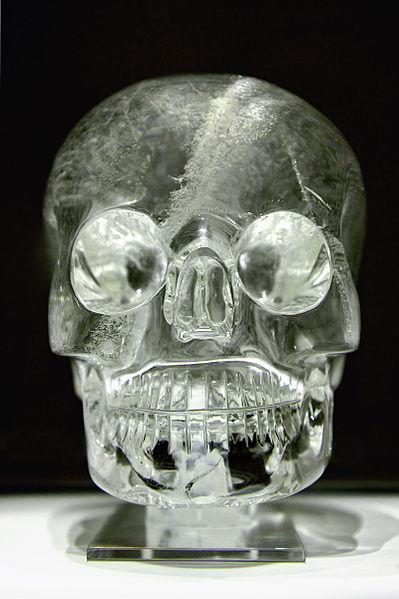
The crystal skull. Collection of the British Museum in London. Image courtesy of Rafał Chałgasiewicz
Another entry in AntiquityNOW’s new Science Fiction section is a story that has bedeviled skeptics and believers alike. The origins and purpose of the crystal skulls have been debated for years, but Eric Vassalo, who submitted portions from his blog post on the subject to AntiquityNOW, is a cynic regarding traditional inquiry. He wanted to analyze for himself what these crystal skulls were all about. As part of a group exploring sites containing these artifacts in Mexico, he mused:
Like a group of mutant X-men we all shared our fascinating and surreal stories of how we came to be in this place doing what so few dare to do, challenge our spoon-fed history and attempt to get at the truth.



 AntiquityNOW