Category Archives: Holidays

The Strange and Mysterious Origins of April Fools’ Day

aril foolsIt’s April Fools’ Day and whether you’re on the giving or receiving end of a joke, today will hopefully be a day for laughter and good-natured conviviality. This holiday has a strange history that may reach all the way back to antiquity. Before the foolishness ensues, let’s take a minute to learn how this celebration began.

The most widely accepted origin of April Fools’ Day, also called All Fools’ Day, comes from 16th century France when the calendar was changed so that New Year’s Day was celebrated on January 1st (according to the Roman calendar) as opposed to celebrating New Year’s in late March or early April with the advent of spring. Not everyone learned of the change right away and people in the country, far from the cities, would have still celebrated a spring New Year. These people were mocked and called fools. However, Alex Boese, curator of the Museum of Hoaxes in San Diego, California and an authority on April Fools’ Day, disputes this theory. Continue reading

Bon Appetit Wednesday! Sabzi Polo Mahi in Honor of Persian New Year

White_house_haft_seenLast Thursday, March 20th, marked the much anticipated first day of spring. At 12:57 pm ET, the sun crossed the equator and the vernal equinox arrived. Many people cheered as winter met its official end, but the date had special significance for Persians. It was the beginning of the Persian New Year or Nowruz, a time for dancing, celebrating and most importantly, feasting! Each year the holiday begins with a special meal enjoyed around the haftseen table, where the foods are symbolic and abundant. In recognition of 2014’s haftseen table, we’re giving you a delicious Persian recipe from this traditional meal that you can enjoy in your home year-round. It’s never too late to celebrate and learn about the cuisine of an ancient culture! Continue reading

St. Patrick’s Day, Leprechauns and Human Folly

Image courtesy of jpmpinmontreal on Flickr.

Image courtesy of jpmpinmontreal on Flickr.

So it’s the wearin’ of the green time again.  In the United States (which in the 18th century took a religious holiday and turned it into a green phenomenon) it’s when everyone claims Irish ancestry for the day.  Just look around and see all things Irish today: green bagels, green beer, green cupcakes and even a green Chicago River. Continue reading

Bon Appetit Wednesday! Celebrate St. Patrick’s Day With Ancient Irish Oatcakes

oatcakesMonday, March 17th is St. Patrick’s Day and regardless of nationality many people will don their greenest outfit and celebrate with a pint of green beer. Some may even enjoy a meal of corned beef and cabbage with potatoes, a traditional Irish feast. However, if you want to celebrate in a truly authentic Irish way, throw out the green beer, ignore those potatoes and have some ancient Irish food. The fact is, although the potato is often associated with Ireland, it is actually Peruvian and only came to Ireland in the early 1600s. And green food coloring in your beer won’t bring you any closer to the heart of the Irish. Enjoy some oatcakes with butter and a tall glass of milk and you’ll be sitting down to a meal the Irish have eaten for thousands of years. Continue reading

AntiquityNOW Celebrates International Women’s Day

International Women's Day 2014

*Click here to see a slideshow of remarkable women throughout history featuring music by the 12th century female composer Hildegard von Bingen.

Music, Color, Costumes and Beads—It’s Mardi Gras Time!

Mardi Gras in New Orleans, 1936.

Mardi Gras in New Orleans, 1936.

Did you know that Mardi Gras has ancient roots? Come back with us to those bygone times and explore the festivities that have led to the sights and sounds of today’s modern-day celebration in New Orleans.

First, the vocabulary surrounding Mardi Gras and Carnival bears some explanation.  The period between January 6, or the Epiphany (ending the twelve days of Christmastide) to Ash Wednesday is the Carnival season, which is based on Christian rituals.  It precedes Lent, a roughly six-week period of sacrifice and prayer prior to Easter Sunday.  Mardi Gras technically is the last day of the Carnival and is held on Fat Tuesday (although the Mardi Gras season is an accepted term often heard).  In fact, the word “carnival” is thought to be from the “Medieval Latin word carnelevarium, meaning to take away or remove meat.”[1] Continue reading

The Ancient Roots of February, the Tiniest Month

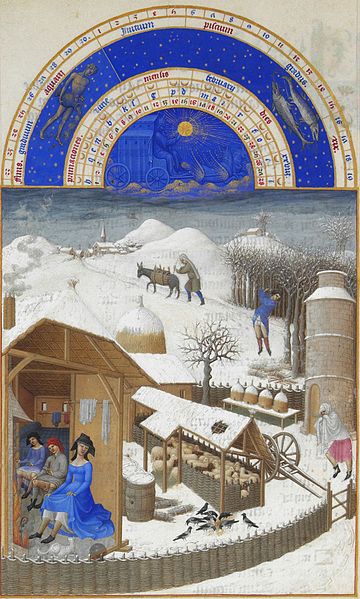
Très Riches Heures du duc de Berry Folio 2, verso: February. Artist: Limbourg brothers (1385–1416).

Très Riches Heures du duc de Berry Folio 2, verso: February. Artist: Limbourg brothers (1385–1416).

Why does February have only 28 days? Why does this one lonely month remain truncated while the other 11 months bask in the fullness of their 30 or 31 days? We have to go all the way back to antiquity to find the answer to this puzzling question.

The roots of our modern calendar can be traced back to the Romans who apparently found calendar-making to be a fairly confusing business. We have few records about the original Roman calendar but legend says that Romulus, the first king of Rome, devised a 10 month lunar calendar that began in March and ended with December, with 6 months having 30 days and 4 having 31. There was no need for designating the extra months of what is now January and February since winter itself was unimportant to note by the Romans because there was no harvest during this time.[1] According to Livy’s The Early History of Rome, Numa Pompilius, the second king of Rome (715-673 BCE), wanted to make a calendar that would sync with the actual lunar year and so he added the months of January and February to account for the extra days.[2] The length of each month was changed so that October retained 31 days, the remaining months from the previous calendar had 29 days, and January and February each had 28 days. However, the Romans believed even numbers were bad luck and so they added a day to January to give it 29. Why didn’t they also add an extra day to February? No one is really sure of the answer to that question but because February still had only 28 days, it was considered unlucky and was devoted to purification rights and honoring the dead.[3] Continue reading

Bon Appetit Wednesday! Ancient Russian Blini: Oh So Savory and Oh So Sweet

blini_1-tIt’s the second week of the Winter Olympics being held in Sochi, Russia and the competition is fierce as each country strives to up their medal count before the closing ceremonies. Maybe you’re planning a big closing ceremonies party or maybe you just need something to munch while you cheer on your favorite athlete. Perhaps you’re in a festive mood.  Maslenitsa is a traditional holiday in Russia celebrated from February 24th – March 2nd.  We’ll get to that in a bit. Either way, this week’s recipe is sure to please. In honor of Mother Russia, we’re exploring the ancient origins of Russian blini.  We’re going to give you two modern blini recipes, one savory and one sweet, so you’ll be prepared no matter what you’re craving. Continue reading

Happy Valentine’s Day! The Power of Love (Pssst—It’s All in the Eyes and Nose)

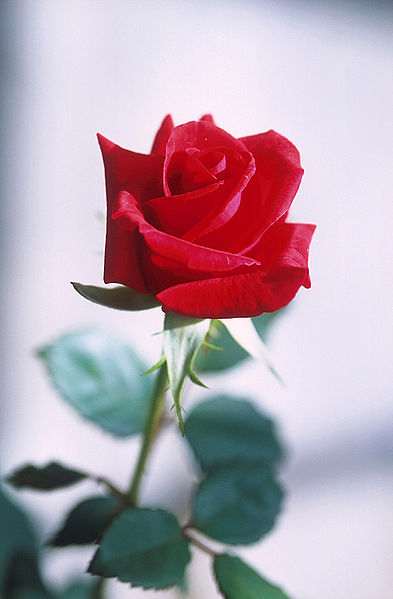
393px-Red_roseRed roses are synonymous with love, and have been for centuries.  But there’s an interesting story behind the tales of starry-eyed lovers and their proclamations of everlasting romance.  The red rose it seems, has as much to do with our eyes and nose as it has to do with affairs of the heart.

First, let’s take a look at the flower that started it all:  the beauteous and aromatic rose. Roses can be traced back 35 million years according to fossil evidence.  Roses were growing wild in many places as diverse as Persia and in what is now Colorado in the United States.  As early as the 11th century BCE the Chinese were cultivating flowers of all sorts.  In fact, China has incredible biodiversity and boasts 93 species and 144 varieties of roses that are native to its habitats.[1]  China became the dominant breeder and purveyor of roses until around 300 years ago, when Europe took the lead in cultivation and breeding.[2] Continue reading

KIDS’ BLOG! Ancient Origins of the XXII Winter Olympics

sochi-2014-262145_640When the Greeks gathered in Olympia for the first Olympic Games in 776 BBC, I’m sure they never imagined that one day, far in the future, the Games would be held high in snow covered mountains or on playing fields made of ice. How could they know that their foot races would turn into races on blades (speed skating) and chariot races would become daring flights around a track made of pure ice (bobsled)? In 1924, the first Winter Olympics was held in Chamonix, France featuring cold-weather sports.  Today we celebrate these Winter Games every four years. Did you know that just like the Olympic Games themselves, many of the winter sports have ancient and historical origins? Continue reading