
 Last Tuesday’s blog explored the neurology of fear and introduced a 2000 year old horror story from Pliny the Younger. Despite its antiquity, this story (actually contained in a missive to an acquaintance by the prolific letter writer) exhibited remarkable 21st century elements. Today’s post is a short story titled “The Ghost Hunter.” Written by Paul Hodge, it is a modern take on storytelling in the gothic style. Notice the common elements with Pliny’s tale: the abandoned residence, unexplained occurrences and a man of doughty character determined to get to the bottom of whatever is going on. Continue reading
A Frightful History: Author P J Hodge Presents “The Ghost Hunter”
Bon Appetit Wednesday! An Ancient Roman Salad
 This week we’re bringing you a recipe straight out of ancient Rome. The Columella Salad, named for its author, Lucius Junius Moderatus Columella, is the perfect side dish and would fit easily on any modern menu. Yet it was created in the first century CE! Full of scrumptious, fresh ingredients, this salad is light, tasty and ancient. Continue reading
Posted in Blog, Bon Appetit Wednesday, Culinary, Culture
Tagged ancient history, ancient recipes, Ancient Rome, ancient salads, AntiquityNOW, Columella, De Re Rustica, Roman salads
Why We Love to Be Scared: Dopamine, Genes and a 2,000 Year Old Horror Story
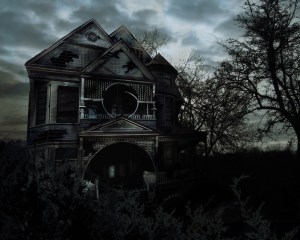
Image credit: Barbara on Flickr.
It’s that time of year again. Halloween. What is it about houses moaning with restless spirits and apparitions rising from graveyard mists that so intrigue us? Today we have movies, TV shows, video games and books regaling us with the most horror-filled scenarios. Dystopias with—name your monster—demons and vampires and zombies threatening to eradicate our species (as if we don’t do a good enough job on our own). There are possessions, evil twins, vivified dolls and deranged clowns. We even have self-proclaimed ghost hunters with their own “reality” shows and the ad revenues, market penetration and viewer numbers demonstrating that scary stuff really can rake in the dough. Why is it we are so enthralled and terrified by the supernatural? Continue reading
Girl Be Heard and AntiquityNOW present Generations: Voices of Women From Antiquity to Modern Day
 In association with AntiquityNOW, Girl Be Heard will be presenting Generations on Wednesday, October 22 at 6:30 pm at the East 4th Street Theatre, 83 East 4th Street, New York, NY as part of their workshop series for the 2014-15 theater season. Generations is being performed during the Estrogenius Festival 2014.
Generations is an ensemble performance devised by Girl Be Heard Company Members in collaboration with women and girls, ages 17 to 61. This is the first show in Girl Be Heard’s history that has brought together women of all ages to research, discuss and write about women across history. This inter-generational laboratory reveals stories of resiliency, both personal and historic. Continue reading
Posted in AntiquityNOW News, Blog, Culture
Tagged AN News, ancient women, AntiquityNOW, Estrogenius Festival, Girl Be Heard, theater
Bon Appetit Wednesday! Tempura Fried Maple Leaves
 They’re everywhere! Autumn leaves are falling, falling, falling and collecting in great, heaping, colorful piles all over lawns, roofs, streets and sidewalks. Beautiful and vibrant for sure, but what to do with so many little pieces of autumn? Most of the time we just bag them up and throw them away, but today we’re giving you another option. Courtesy of Japan, we bring you Fried Maple Leaves! There are accounts that these leaves have been eaten for thousands of years in Japan, but since tempura only arrived in the 16th century, the truth is they’ve probably been around for a little over 500 years. We’re bringing you an updated modern version created by James Wong, a chef who wanted to try the treat, but was nowhere near Japan. His version is made with maple leaves, pumpkin and fig. Continue reading
AntiquityNOW Introduces the Education Topic Matrix
 AntiquityNOW is pleased to announce the launch of our Education Topic Matrix, an index of content for educators to use as supplements to their classroom curricula. This matrix includes all our blog posts, Kids’ Blog posts, educational projects, videos, creative writing, arts and crafts, curricula as well as our partner projects, organized by region and era. It’s cross-indexed, covers a wide variety of subjects, is easy to search and is organized under headings that teachers can readily recognize. And the best part? It’s completely free. Continue reading
In Praise of Teachers—4,000 Years of Preparing the Next Generation
 UPDATE! This post was originally published on May 7, 2013. As long as humans have existed, people have learned from one another. It’s in our DNA. This is the genetic matrix upon which great civilizations evolved and centers of knowledge arose. For those who become the teachers, they take on the mantle of an ancient and noble art. AntiquityNOW is an enthusiastic supporter of teachers and their contributions through the often tumultuous but ever intriguing course of history. In that spirit we will be announcing on Tuesday, October 14 a very special resource tool specifically designed for teachers that can help them demonstrate to their students how the ancient past is not as distant as they may think. Stay tuned!
For more about inspiring and influential educators throughout history, check out our slideshow celebrating World Teachers’ Day 2013.
*************************
Who was your favorite teacher or professor? Can you still remember his or her lectures, an activity you did in class, a lesson that changed the way you think about the world? Great teachers make an indelible mark on their students and are often remembered long after those students leave the classroom. In honor of Teacher Appreciation Day, we take a look back at some of antiquity’s greatest educators and how we continue to use their teachings and methods today. Continue reading
Posted in Blog, Education, Public Life
Tagged ancient history, AntiquityNOW, Buddha, Confucius, education, Jesus, Socrates, Teacher Appreciation, teaching
Bon Appetit Wednesday! Easy, No-Bake Cookies with Quinoa, the Incas’ “Mother of all Grains”
 Last week we celebrated ancient amaranth, superfood of the Aztecs. So this week we decided to explore another ancient “grain” that sustained a great civilization. Quinoa was to the Incas what amaranth was to the Aztecs: a source of strength and life. And just like amaranth, quinoa isn’t really a grain at all. It is a seed from a plant in the goosefoot family, and along with amaranth and buckwheat is often called a “pseudocereal” because it is grown for use as a grain.[1] Let’s take a trip through quinoa’s history before indulging in a delectable recipe for easy, gluten-free, dairy-free, No-Bake Quinoa Cookies. Continue reading
KIDS’ BLOG! Take a Trip Through an Ancient Roman Kitchen
 What would it be like to cook and eat in an ancient Roman kitchen? Would there even be a stove or an oven? Did these ancient people have any way to keep their food cold? Did they have a sink or running water?
Archaeologists, led by Professor Jeroen Poblome, digging at a site in Turkey, have discovered a nearly 2,000 year old kitchen in the ruins of the ancient Roman city of Sagalassos. Originally part of the expanded Roman Empire, this city is located in the southwestern part of today’s Turkey. Professor Marc Waelkens and his team from Catholic University of Leuven, Belgium had been digging in this site since 1990, painstakingly uncovering the hidden city. Poblome’s team has joined them, and the archaeologists were delighted this summer to uncover a kitchen dating as early as 200 CE.[1] Continue reading
Roman Gladiators: How They Compare to Modern Sporting Heroes

UPDATE! This post was originally published on April 4th, 2013. American football season is in full swing and the players are back in the news for their behavior on and off the field. As the NFL grapples with scandal, the game goes on and fans all over the country are gathering each week, suiting up in their best team apparel, breaking out the tailgate, switching on the big screen or even traveling to the stadium to cheer on their favorite players and teams. We thought this would be a perfect time to republish this post about the similarities between our modern sporting celebrities and the ancient heroes of the gladiatorial games. You’ll be amazed to learn how much our modern athletes have in common with their ancient counterparts. And don’t miss Part 1 of this 2-part series, Super Bowl XLVII and the Superstars of Ancient Rome, which illuminates even more fascinating comparisons. Continue reading
Posted in Blog, Celebrities, Public Life, Sports
Tagged ancient history, AntiquityNOW, art history, football, gladiators, Pompeii, sports, Super Bowl




 AntiquityNOW