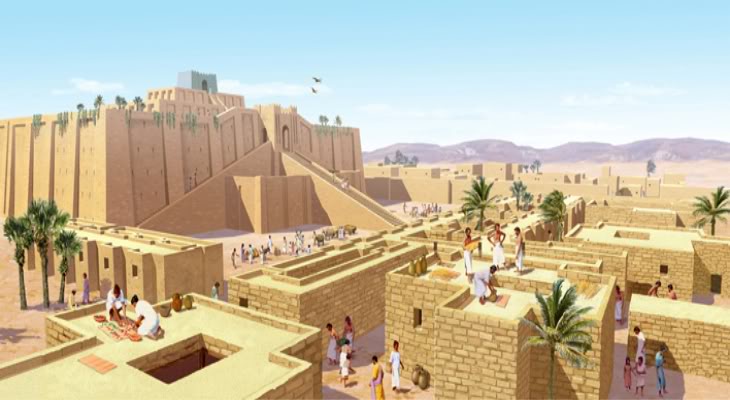
Foodborne Illness: The History of an Invisible Enemy

The history of foodborne illness is as complex and tortuous as the history of eating. Since the very beginning, foodborne illness has been a perpetual hitchhiker in our journey with food. With every human advancement in eating and acquiring food, foodborne illness has been ready with a challenge, finding new ways to survive in changing environments. Bacteria’s tenacious flagella have withstood numerous developments in our diet and continue to plague our lives today.

 IN THE BEGINNING
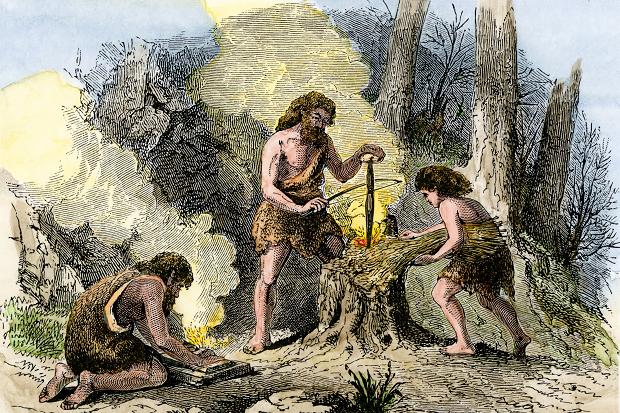
Humans discover fire.

Humans discover fire.

The food rules for early man were simple: eat what you can get. Lacking discerning palettes, these opportunistic hunters were most likely consuming contaminated meat, poisonous mushrooms and indigestible grains. The meat from abandoned carcasses? On the menu. The sickest, weakest animals? A quick and easy appetizer. The variety of microbial fauna they frequently ingested has been preserved for posterity in the form of coprolites (fossilized feces). These generous deposits give us a glimpse of their diet as well as the pathogenic organisms therein.[1] Continue reading

Bon Appetit Wednesday! Grilled Butter Miso Corn

Grilled Butter Miso CornThis week we’re bringing you an ancient flavor of Japan, miso, paired with a staple of summer barbecues, corn on the cob. The salty miso perfectly complements the sweet corn, creating a unique pairing full of flavor and history. Before we start grilling, let’s take a minute to explore the roots of miso, a food that has sustained the Japanese for centuries.

In most cultures around the world today, miso is thought of as a seasoning. The fermented soybean paste has an extreme saltiness, and so most people use only a small amount to flavor their food. However, the Japanese see miso as much more than just a condiment. “It is a basic staple, a concentrated source of protein and other nutrients important enough to be thought of as a full-fledged food.”[1] Continue reading

The Ancient Roots of Disney’s Blockbuster Film “Frozen”

FrozenIn our previous post, The Disneyfication of Pocahontas and the True Story of Uleleh, we explored the origins of the Disney film Pocahontas and discovered that it has a deeper, more complex history than we thought. In today’s post, we delve into another Disney film, Frozen, which is said to be based on the fairy tale The Snow Queen by Hans Christian Andersen. Interestingly, there are speculations that Andersen’s fairy tales were actually inspired by Norse mythology, so we decided to examine The Snow Queen for these literary remnants. Join us as we peel back the layers of history to see how an ancient culture eventually gave rise to a 21st-century Oscar-winning animated film. Continue reading

LegacyQuest: Through the Eyes of the Students

Sun BigThe 2014 LegacyQuest International Children’s Film and Video Festival was a resounding success, but it wouldn’t have been possible without the dedication and hard work of the teachers and students who participated. For students, the projects presented some real challenges.  They had to tackle complex subjects, reduce them to their essentials, turn the material into cogent scripts and then tell a story through visuals.  The result?  A collection of thoughtful and engaging films that proudly represent LegacyQuest and what it hoped to achieve. We at AntiquityNOW wanted to know how the process of creating a LegacyQuest entry affected the students who participated. The slideshow below features quotes from students talking about their experiences. Click here to read the students’ letters in their entirety.

This slideshow requires JavaScript.

Bon Appetit Wednesday! Ancient Mesopotamian Palace Cakes From Ur

UROFTHECHALDEESToday’s recipe is fit for royalty! This cake was served in the palaces of the ancient Mesopotamian city of Ur and uses one of the most important food staples in ancient Mesopotamia—the date. Ur was located in what is now Iraq and was an important city on the Persian Gulf. It was inhabited from 3800 BCE to 450 BCE. Due to its position on the gulf, Ur became an enormous and hugely influential city trading with countries as far away as India. Its citizens were wealthy and lived unusually comfortable lives compared with those in other Mesopotamian cities.[1] Continue reading

LegacyQuest: A Teacher’s Perspective

LegacyQuest large logo blue borderThe inaugural LegacyQuest International Children’s Film and Video Festival has come to an end, the winners have been announced and we are already looking forward to a fantastic festival in 2015. We wanted to know the reactions of the teachers who decided to use this competition as a way to get their students excited about the ancient past. The following is what Britta Gramer from Morganton Day School had to say. Continue reading

AntiquityNOW Celebrates National Pet Month

For thousands of years humans have had a complex relationship with animals. Food, protection, companionship–animals have been an inextricable component of society from its earliest formations.

We’ve been celebrating AntiquityNOW Month in May.  But we are proud to share this special time with National Pet Month.  What better way to celebrate how antiquity lives today than to show the importance of our animal companions through time?

This slideshow requires JavaScript.

Bon Appetit Wednesday! Kheer: Ancient Indian Rice Pudding

Making_of_KheerThis week we’re bringing you a sweet, exotic treat from India. Kheer is a rice pudding made in several variations across South Asia and of course, it has a history! Also called payasam, this ancient dessert comes from the Hindi culture and is most often seen at ceremonies, feasts and celebrations, although it can easily be enjoyed any time of year. Continue reading

The Knossos Dolphin: Create Your Own Piece of Art Inspired by Antiquity with Dan Fenelon

dolphin frescoIn honor of AntiquityNOW Month, our Artist-in-Residence Dan Fenelon has created a paint by number activity using one of his paintings inspired by the Minoan “Fresco of the Dolphins” on the island of Knossos. The fresco is from the Palace of Knossos located just south of modern-day Heraklion near the north coast of Crete. The palace was built by the Minoans around 1950 BCE, but was damaged by an earthquake in 1700 BCE and had to be rebuilt.[1] Commissioned by King Minos, the palace was the creation of the ancient architect Dedalos and was said to have been so complex in its design that no one placed inside its walls could ever find its exit.[2] The second palace built on the remains of the first continued this labyrinthine structure, but included several changes. In his book “Architecture of Minoan Crete”, John McEnroe writes,

In the second Palace, much of the monumental bulk of the earlier building would be lightened through structural innovations and intricate details, and the taste for colored stone would be partly replaced by representational wall paintings.[3] Continue reading

Announcing the Winners of the Inaugural LegacyQuest International Children’s Film and Video Festival

LegacyQuest large logo blue borderAntiquityNOW and Archaeology Legacy Institute are proud to announce the winners of the 2014 LegacyQuest International Children’s Film and Video Festival.  This was LegacyQuest’s inaugural year and we were delighted with the high quality of the entries and all the hard work of the students and teachers who participated. We were selective as to the criteria for the competition, wanting children to have as professional an experience as possible. The entrants certainly lived up to the high standards that were set for them. We look forward to many more successful festivals in the future!

The winners were announced at The Archaeology Channel (TAC) International Film and Video Festival in Eugene Oregon on May 11, 2014.  TAC is a program of Archaeological Legacy Institute.

It’s not too soon to think about next year’s LegacyQuest International Children’s Film and Video Festival.  Click here for details on the 2015 competition.

And the winners are…

First Prize

Social Media: Dreaming Through the Ages

Morganton Day School, Morganton, NC.


Second Prize

Fashion 2

Baldwin School, Bryn Mawr, PA.


Third Prize

Storytelling 2

Baldwin School, Bryn Mawr, PA.


Honorable Mentions 

(in alphabetical order by title and school)

Architecture 1. Baldwin School, Bryn Mawr, PA.

Architecture 2. Baldwin School, Bryn Mawr, PA.

Architecture 3. Baldwin School, Bryn Mawr, PA.

Fashion 1. Baldwin School, Bryn Mawr, PA.

Fashion 3. Baldwin School, Bryn Mawr, PA.

Sports 1. Baldwin School, Bryn Mawr, PA.

Storytelling 3. Baldwin School, Bryn Mawr, PA.

Dancing Through the Ages. Morganton Day School, Morganton, NC.