
 Last week we celebrated ancient amaranth, superfood of the Aztecs. So this week we decided to explore another ancient “grain” that sustained a great civilization. Quinoa was to the Incas what amaranth was to the Aztecs: a source of strength and life. And just like amaranth, quinoa isn’t really a grain at all. It is a seed from a plant in the goosefoot family, and along with amaranth and buckwheat is often called a “pseudocereal” because it is grown for use as a grain.[1] Let’s take a trip through quinoa’s history before indulging in a delectable recipe for easy, gluten-free, dairy-free, No-Bake Quinoa Cookies. Continue reading
Category Archives: Culture
Bon Appetit Wednesday! Easy, No-Bake Cookies with Quinoa, the Incas’ “Mother of all Grains”
KIDS’ BLOG! Take a Trip Through an Ancient Roman Kitchen
 What would it be like to cook and eat in an ancient Roman kitchen? Would there even be a stove or an oven? Did these ancient people have any way to keep their food cold? Did they have a sink or running water?
Archaeologists, led by Professor Jeroen Poblome, digging at a site in Turkey, have discovered a nearly 2,000 year old kitchen in the ruins of the ancient Roman city of Sagalassos. Originally part of the expanded Roman Empire, this city is located in the southwestern part of today’s Turkey. Professor Marc Waelkens and his team from Catholic University of Leuven, Belgium had been digging in this site since 1990, painstakingly uncovering the hidden city. Poblome’s team has joined them, and the archaeologists were delighted this summer to uncover a kitchen dating as early as 200 CE.[1] Continue reading
Bon Appetit Wednesday! Popping Up Some Ancient Amaranth

Image credit: Kurt Stüber [1] – caliban.mpiz-koeln.mpg.de/mavica/index.html part of http://www.biolib.de
Posted in Blog, Bon Appetit Wednesday, Culinary, Culture, Public Life, Religion
Tagged amaranth, ancient history, ancient recipes, AntiquityNOW, Aztecs, Bon Appetit Wednesday, gluten free, Hernan Cortes, paleo
Celebrating National Coffee Day: A Jittery Goat, Political Plots, Slave Labor, Grounds for Divorce—The Coffee Bean Brews Up a Tumultuous World History
The inimitable coffee bean. Lusciously colored, smooth, glistening, fragrant. It’s a devilish addiction shared by millions of people throughout history. But aside from its robust flavor and energized boost, the bean has given us a history that is eye-opening and colorful, just like the bean itself. Let’s take a step back in time and review a few facts drawn from the nefarious and splendiferous legacy of this enduring brew.
Remembering the 75th Anniversary of The Wizard of Oz: The Ancient Voice of “Somewhere Over the Rainbow”
 It starts with a single drop of water. As visible light passes through the drop, the light is refracted as through a prism, split into its component wavelengths and reflected back to the eye. Multiplied by thousands of drops in the sky, an arc of red, orange, yellow, green, blue, indigo and purple emerges as if by magic. Rainbows…mystical, splendiferous, mind-bending. Continue reading
Posted in Art, Blog, Culture, Literature, Music, Natural Disasters, Public Life, Religion, Science and Technology
Tagged ancient history, ancient rainbows, AntiquityNOW, Australian Aboriginal Rainbow Serpent, Cree Rainbow Serpent, Epic of Gilgamesh, Greek mythology, Iris, Somewhere Over the Rainbow, The Wizard of Oz
Bon Appetit Wednesday! Rosh Hashanah Around the World: Ancient Influences, Modern Recipes
 Rosh Hashanah, the Jewish New Year, is upon us again and AntiquityNOW wants to wish you peace and joy in the coming year. L’Shanah Tovah!
This year the first day of the holiday falls on a Bon Appetit Wednesday, so it’s the perfect time to share some delicious recipes. For those who don’t celebrate Rosh Hashanah, it is easy to assume the food is very uniform, with all observers around the world dining on the same basic dishes year after year. While it is certainly true there are traditional foods with deep meaning and significance that are included in many Rosh Hashanah meals, there also exists a great variety among dishes (read our blog Traditional Meets Modern: Celebrating the Foods of Rosh Hashanah for more information on the traditional menu). The people of each country, region and household have been influenced by their ancient past. And so, a Rosh Hashanah cookie is not just a Rosh Hashanah cookie. It is flavored with unique and sometimes ancient ingredients, prepared and eaten by Jewish families who have planted roots all over the globe, and is passed down to future generations who will add their own twist to the recipes. A cookie becomes a wonderful fusion of past, present and future. Let’s explore two examples of how regional differences can create wonderful variations of favorite dishes. Continue reading
Introducing AN Forum: Commentary From Around the Globe
 AntiquityNOW is launching AN Forum, a new platform that encourages global conversation about the importance of cultural preservation and the enduring influence of the ancient past on our modern lives. Periodically, we will post articles, commentaries and other posts from the web’s trove of opinion and reporting that spark our curiosity, enlighten our understanding and strike our fancy. Please feel free to share your own original writings or articles you come across of particular interest on topics exploring our cultural legacies from around the world. Continue reading
Bon Appetit Wednesday! Almond Brittle with the Ancient Anise
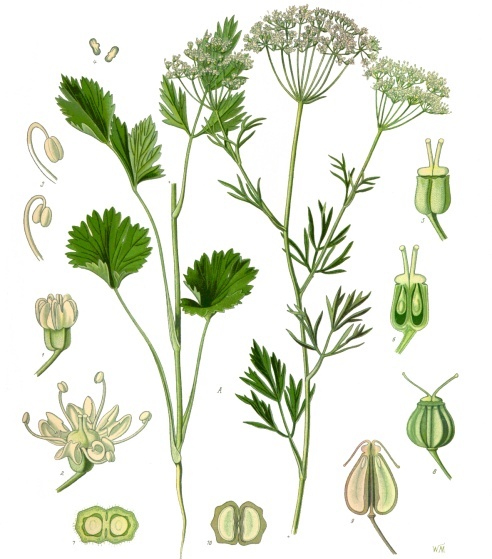 A small and unassuming looking herb, anise (also called aniseed) has been treasured by many different civilizations since antiquity. While it is related to several other well-known herbs such as cumin, fennel and dill, anise has made a special place for itself. Today we’re bringing you a recipe for Anise Almond Brittle, a perfect treat to start the fall season. First, let’s find out why this little spice has been popular for millennia! Continue reading
National Anthems: Ancient Elements, Modern Resoundings
 Last Sunday, September 14th, was the 200th anniversary of the writing of the United States’ national anthem, The Star Spangled Banner. Inspired by the raising of the American flag at Fort McHenry in Baltimore, Maryland, which signified a major victory by the Americans over the British during the War of 1812, Francis Scott Key penned a homage to the “broad stripes and bright stars” he saw that night. This year, people celebrated across the land with concerts dedicated to the music of the United States. Continue reading
Posted in Blog, Communications, Culture, Holidays, Literature, Music, Politics, Psychology, Public Life, Science and Technology, Sports, War and Violence
Tagged Ancient Egypt, Ancient Greece, ancient history, Ancient Rome, AntiquityNOW, Du Gamla Du Fria, Hatkivah, Het Wilhelmus, Inno di Mameli, Kimigayo, music psychology, national anthems, Star Spangled Banner
Looking for Natural Skin Care Tips? Ancient Chinese Empresses and Concubines Share Their Recipes

1862 advertisement for Laird’s Bloom of Youth, claiming to preserve and beautify the complexion and skin. Source: Cosmetics and Skin.
UPDATE! This post was originally published on January 17, 2013. Skin care and that eternal search for youth are back in the news this month with a remedy that is both scandalous and ancient: blood. A new study has found that young blood does have powers of rejuvenation. The blood plasma from young mice was injected into old mice who then experienced improved learning and memory.[1] It isn’t a far leap to imagine applying this research to skin care and the possibility that blood may impart youth to the physical appearance as well. This is certainly not a new thought. History has several examples of people who believed blood was perhaps a fountain of youth. Continue reading
Posted in Beauty, Blog, Culture
Tagged ancient history, AntiquityNOW, china, history, pearl powder, skin care




 AntiquityNOW