
 It’s National Dairy Month in the United States and since the use of dairy in food has a long and rich history throughout antiquity, we thought we’d bring you a recap of some delicious and nutritious ways that ancient civilizations got things cookin’ with dairy! Continue reading
Tag Archives: ancient history
Bon Appetit Wednesday! National Dairy Month
The Slavery Project Part 1: In the Eye of the Beholder

Roman collared slaves. Marble relief, from Smyrna (Izmir, Turkey), 200 CE.
Collection of the Ashmolean Museum, Oxford, England.
Slavery has been part of the human condition for centuries. Although largely outlawed in modern times, human bondage still exists today in various forms, including sexual trafficking, domestic servitude and illegal work conditions. Why has slavery been an accepted part of numerous civilizations through time? Why does slavery continue to exist today in various forms around the world? Continue reading
Posted in Blog, Crime, Culture, Education, Human Rights, Law, Public Life
Tagged ancient history, ancient slavery, AntiquityNOW, Bernard Means, Minecraft, minecraft curricula, Peter Albert, slave, slavery, slaves, social studies, The Slavery Project
Bon Appetit Wednesday! The Magic of Ancient Turmeric
 If you love curry, you’ve undoubtedly tasted turmeric and loved its unique, taste-infused flavor. However, you may not know much about this amazing spice. Well it’s time to change that and become familiar with an ancient ingredient that possesses incredible healing properties. Today’s recipe is for Turmeric “Golden Milk,” an extremely simple but fantastically powerful drink. Also, it’s National Dairy Month in the United States, so you can celebrate the goodness of dairy while enjoying the health benefits of turmeric. Continue reading
Bon Appetit Wednesday! National Herbs and Spices Day
 Today is National Herbs and Spices Day! We thought it would be the perfect time to remind you of some ingenious and delicious ways the ancients made use of herbs and spices. Not only did they season their food, they also used these ingredients medicinally. Explore below the recipes along with their fascinating histories that have tickled the palate and nurtured the species through the millennia: Continue reading
Nature, Ecotherapy and a Peek into the Past Through National Parks

Crater Lake National Park, Oregon.
UPDATE! This post was originally published on September 9, 2014. In several countries around the world,
students are gearing up for summer break, an exciting time of fun, sun and long-awaited vacations. If
you live in the United States, your family may be planning a trip to one of the many national parks. There
are a wide variety of places to visit, packed with rich cultural heritage, fascinating pieces of history, grand
architecture, breathtaking natural vistas and heart-pounding encounters with wildlife. Before you go, take a minute to read our post below to learn about the ancient history of natural settings and how our park system came to be. Also, if you want a truly memorable experience, check out this article in The New York Times on how to get the most out of your national park visit.
*****************************************
When you first enter Crater Lake National Park, it’s easy to imagine you’ve stepped thousands of years into the past. Crater Lake in Oregon was created when Mount Mazama erupted close to 8,000 years ago, and ignoring the RVs visiting the park today, it’s easy to imagine it has not changed much from what it must have looked like after the ash settled. Continue reading
AntiquityNOW Month: Factoid Friday! Ancient Cheese and the Mummy of Invention

Image credit: Wang da Gang
Cheese may not be the first thought that comes to mind when Chinese mummies are mentioned, but some of those very mummies—dating back to 1615 BCE—have been found with curds of cheese on their persons. Have we piqued your curiosity? Click here to learn more about how the Chinese made cheese thousands of years ago, including their innovative technology using the ancient superfood kefir (recipe included).
Posted in Blog
Tagged ancient cheese, ancient history, ancient kefir, AntiquityNOW, AntiquityNOW month, cheese mummies, Chinese mummies
Bon Appetit Wednesday! Ancient Ricotta and a Simply Delicious Tart
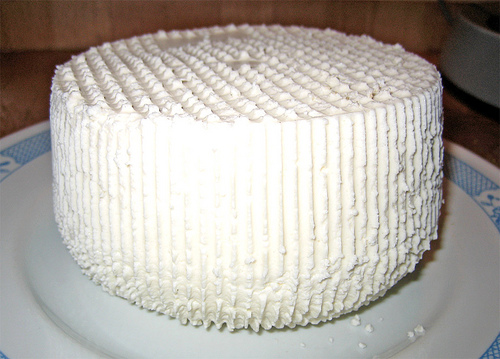
Ricotta. Image credit: Fugzu on Flickr
Did you know that soft, delicious ricotta cheese isn’t really a cheese at all? It’s actually a by-product of cheese-making. We’ve assembled some facts about the history of this extremely versatile “cheese,” along with a simple recipe for a ricotta tart that combined with any seasonal fruit makes for a treat of sweet perfection.
So, ricotta isn’t a cheese. It’s actually a creamy curd that has been cooked twice. The excess whey leftover when making cheese is skimmed off and then recooked, at which point the albumin in the whey solidifies and becomes the ricotta cheese we know and love. Of course, something this delicious has many potential origins, but it almost certainly evolved, as so many ancient foods did, out of necessity. It came from “peasant thrift, dairy farmyard recycling and domestic frugality.”[1] There are a few things we know for certain about ricotta’s past. Continue reading
The Archaeology Channel International Film and Video Festival 2015
 The Archaeology Channel, a program of Archaeological Legacy Institute (ALI), has just completed another successful annual International Film and Video Festival. Packed with insightful and provocative films as well as lively and important discussions on the significance of cultural preservation, this year’s festival touched minds and hearts with its depictions of how precious and vulnerable our world heritage is.
The festival’s mission is:
To exhibit for our audience the wonderful diversity of human cultures past and present in the exploration of our place in history and in our world. To promote the genre and the makers of film and video productions about archaeology and indigenous peoples.
You can see all of the festival’s winners on the TAC website, but we’d like to highlight the winners of Best Film by Jury Vote and Audience Favorite. Each film had an important message to share and did so beautifully, using the art of film to capture the images and stories of the ages. Continue reading
AntiquityNOW Month: Make Something Monday! Bake Quinoa Cookies with an Ancient Grain
 It’s AntiquityNOW Month! Make delicious 5-Minute No Bake Quinoa Cookies using what the Incas’ called the “Mother of all Grains.”
AntiquityNOW Month: Factoid Friday! Hygiene and the Yuck Factor
 What do ashes, animal fat and goat tallow have in common? Find out what the ancient Babylonians, Egyptians, Phoenicians, Germans and Gauls knew about soap and you’ll have your answer. From 2800 BCE we’ve been scrubbing and dubbing ourselves with all manner of cleansers. Learn about the antecedents of modern hygiene and personal care here.
Posted in Blog
Tagged ancient history, ancient hygiene, ancient soap, AntiquityNOW, AntiquityNOW month, Factoid Friday




 AntiquityNOW