Category Archives: Recreation

Easter, Resurrection and Chocolate Bunnies: Social Marketing Through the Ages

Image courtesy of Toelstede (Wikipedia-Name Nyks).

Image courtesy of Toelstede (Wikipedia-Name Nyks).

Easter is one of the holiest of holidays for Christians.   And with Easter’s roots in antiquity, we can see why the symbolism of this holiday continues to give succor and hope to believers today. But Easter is also a holiday that resonates for secular audiences.  You just have to know your market.

Easter derives its name from Eostre, an Anglo-Saxon goddess of spring. As happened with many pagan holidays, early Christians saw an opportunity.  Around the second century CE they began absorbing Eostre’s meaning into their own story of Christ’s death and resurrection.  It was the holiday that spoke to the core of the human experience:  that death was merely transitory and that life—whether in this world or the next–prevailed.  So the most heralded and cherished concept of the Christian faith became entwined with Eostre, which itself commemorated life triumphing over death.  By correlating the stories over time, the fledgling Christian church not only gained a popular holiday, but also converts.  Forget today’s marketing calibrations for brand loyalty, return on investment and predictive validity.  This early social marketing by enterprising Christians is a case study of excellence in branding.  What better than a holiday celebrating life over death?  What smarter business plan than capitalizing on the success and market share held by your competitor, in this case, Eostre celebrants? Continue reading

The Strange and Mysterious Origins of April Fools’ Day

aril foolsIt’s April Fools’ Day and whether you’re on the giving or receiving end of a joke, today will hopefully be a day for laughter and good-natured conviviality. This holiday has a strange history that may reach all the way back to antiquity. Before the foolishness ensues, let’s take a minute to learn how this celebration began.

The most widely accepted origin of April Fools’ Day, also called All Fools’ Day, comes from 16th century France when the calendar was changed so that New Year’s Day was celebrated on January 1st (according to the Roman calendar) as opposed to celebrating New Year’s in late March or early April with the advent of spring. Not everyone learned of the change right away and people in the country, far from the cities, would have still celebrated a spring New Year. These people were mocked and called fools. However, Alex Boese, curator of the Museum of Hoaxes in San Diego, California and an authority on April Fools’ Day, disputes this theory. Continue reading

St. Patrick’s Day, Leprechauns and Human Folly

Image courtesy of jpmpinmontreal on Flickr.

Image courtesy of jpmpinmontreal on Flickr.

So it’s the wearin’ of the green time again.  In the United States (which in the 18th century took a religious holiday and turned it into a green phenomenon) it’s when everyone claims Irish ancestry for the day.  Just look around and see all things Irish today: green bagels, green beer, green cupcakes and even a green Chicago River. Continue reading

The Disneyfication of Pocahontas and the True Story of Uleleh

pocahontasThe story of Pocahontas has all the elements of a good drama: danger, the threat of great cruelty, bravery, a hint of romance and prevailing mercy. Who doesn’t like to imagine a beautiful young Native American princess shielding a handsome English soldier just as a warrior’s club is raised to deliver a deadly blow? Continue reading

Music, Color, Costumes and Beads—It’s Mardi Gras Time!

Mardi Gras in New Orleans, 1936.

Mardi Gras in New Orleans, 1936.

Did you know that Mardi Gras has ancient roots? Come back with us to those bygone times and explore the festivities that have led to the sights and sounds of today’s modern-day celebration in New Orleans.

First, the vocabulary surrounding Mardi Gras and Carnival bears some explanation.  The period between January 6, or the Epiphany (ending the twelve days of Christmastide) to Ash Wednesday is the Carnival season, which is based on Christian rituals.  It precedes Lent, a roughly six-week period of sacrifice and prayer prior to Easter Sunday.  Mardi Gras technically is the last day of the Carnival and is held on Fat Tuesday (although the Mardi Gras season is an accepted term often heard).  In fact, the word “carnival” is thought to be from the “Medieval Latin word carnelevarium, meaning to take away or remove meat.”[1] Continue reading

It’s a 3D Life: Using Minecraft to Recreate Antiquity

minecraft_wallpaper_by_woopwoopwoop11-d475steIt’s a strange world of 3D cubes that comprise environments both hauntingly beautiful and brutally harsh.  Rivers flow through peaceful meadows, deserts and jungles teem with hidden dangers and mountains loom in awe-inspiring splendor.  For the high school students in Peter Albert’s class at The Hun School, a private academy in Princeton, NJ, Minecraft is a fantasy computer game with considerably high stakes and a provocative underlying premise.  In this 3D virtual habitat, students confront a primal question:  Do you have what it takes to survive? Continue reading

Happy Valentine’s Day! The Power of Love (Pssst—It’s All in the Eyes and Nose)

393px-Red_roseRed roses are synonymous with love, and have been for centuries.  But there’s an interesting story behind the tales of starry-eyed lovers and their proclamations of everlasting romance.  The red rose it seems, has as much to do with our eyes and nose as it has to do with affairs of the heart.

First, let’s take a look at the flower that started it all:  the beauteous and aromatic rose. Roses can be traced back 35 million years according to fossil evidence.  Roses were growing wild in many places as diverse as Persia and in what is now Colorado in the United States.  As early as the 11th century BCE the Chinese were cultivating flowers of all sorts.  In fact, China has incredible biodiversity and boasts 93 species and 144 varieties of roses that are native to its habitats.[1]  China became the dominant breeder and purveyor of roses until around 300 years ago, when Europe took the lead in cultivation and breeding.[2] Continue reading

KIDS’ BLOG! Ancient Origins of the XXII Winter Olympics

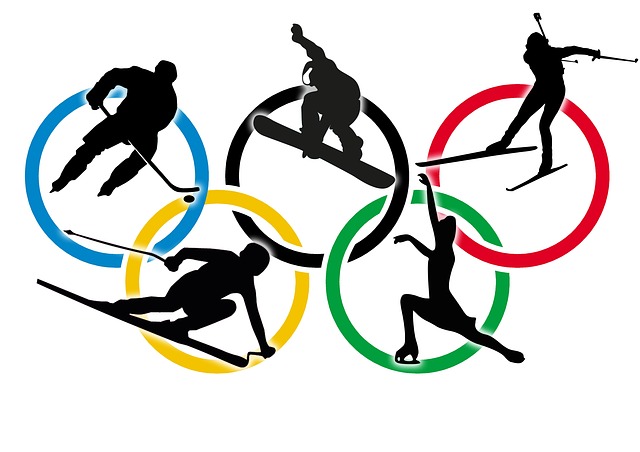
sochi-2014-262145_640When the Greeks gathered in Olympia for the first Olympic Games in 776 BBC, I’m sure they never imagined that one day, far in the future, the Games would be held high in snow covered mountains or on playing fields made of ice. How could they know that their foot races would turn into races on blades (speed skating) and chariot races would become daring flights around a track made of pure ice (bobsled)? In 1924, the first Winter Olympics was held in Chamonix, France featuring cold-weather sports.  Today we celebrate these Winter Games every four years. Did you know that just like the Olympic Games themselves, many of the winter sports have ancient and historical origins? Continue reading

Super Bowl 2014 and Aztec Chocolate Caramel Popcorn—Sweet Victory All Around

Image courtesy of marsmet522.

Image courtesy of marsmet522.

Bon Appetit Wednesday! on January 22 showcased this recipe—strategically posted between National Popcorn Day and the National Football League’s Super Bowl XLVIII in the United States—and described the relationship between the Aztecs, popcorn and chocolate.  In honor of the Super Bowl being played today, we are re-posting the recipe for the football parties being held far and wide. But so you know, fans of the Denver Broncos and Seattle Seahawks may want to take a page from Aztec sporting history as kickoff approaches. Continue reading

May the Force Be With You: AntiquityNOW Marking International Star Wars Day During AntiquityNOW Month in May

Star Wars Image copyThe Star Wars series has defined generations of space enthusiasts and launched fantasy franchises that try to compete, but never beat, the original.  Not to be outdone, AntiquityNOW has a new take on this iconic brand thanks to Jason Allen, PhD., who is Coordinator of Social Science at Blue Ridge Community and Technical College.  Last year Allen created a well-received lesson plan in honor of International Star Wars Day on May 4 that featured both Star Wars and The Lord of the Rings movies.  This year Allen will be working with AntiquityNOW on another curriculum that mines the ancient motifs in these series to illustrate how science fiction can reflect life truths, whatever the life form. Continue reading